Here’s something that still feels like magic every time I think about it. When you brake in a gasoline car, all that energy, the momentum you paid for with fuel, gets thrown away as heat, screaming off the brake rotors into the air, gone forever. When you slow down in an electric car, that same energy flows backward into the battery, adding range. You are, quite literally, refueling by hitting the brakes.
That’s regenerative braking, and it’s one of the coolest tricks in the EV playbook. But it’s also one of the most misunderstood, because you’ll see breathless claims that “regen adds 30 percent range!” splashed everywhere, and the truth is more nuanced and more interesting than that.
So let me explain exactly how regenerative braking works, then give you the honest answer to the question everyone actually wants answered: how much range can you really gain? Spoiler: it depends enormously on how and where you drive, and I’ll show you the numbers.
How the Magic Actually Works
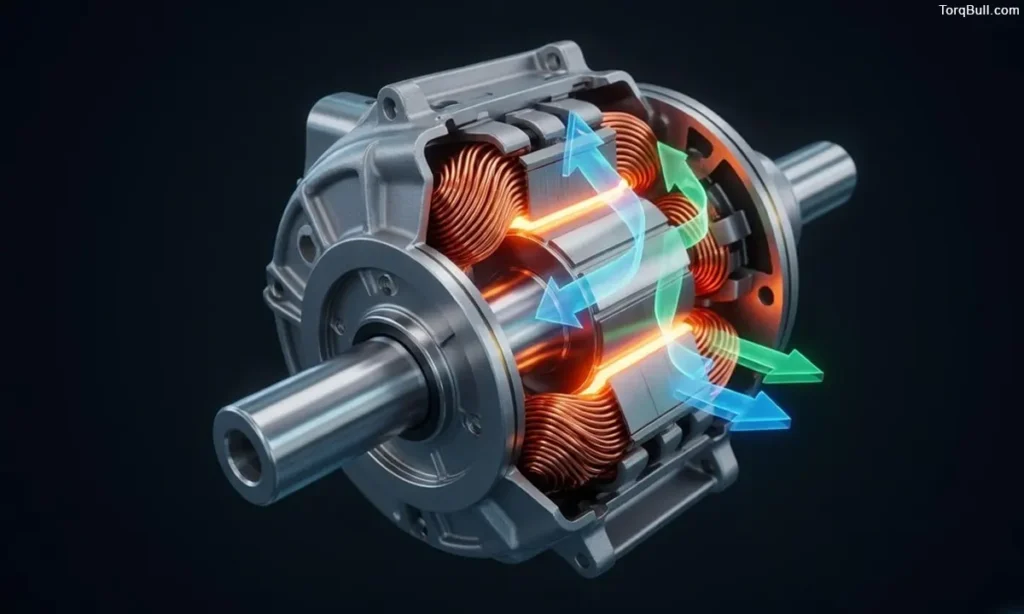
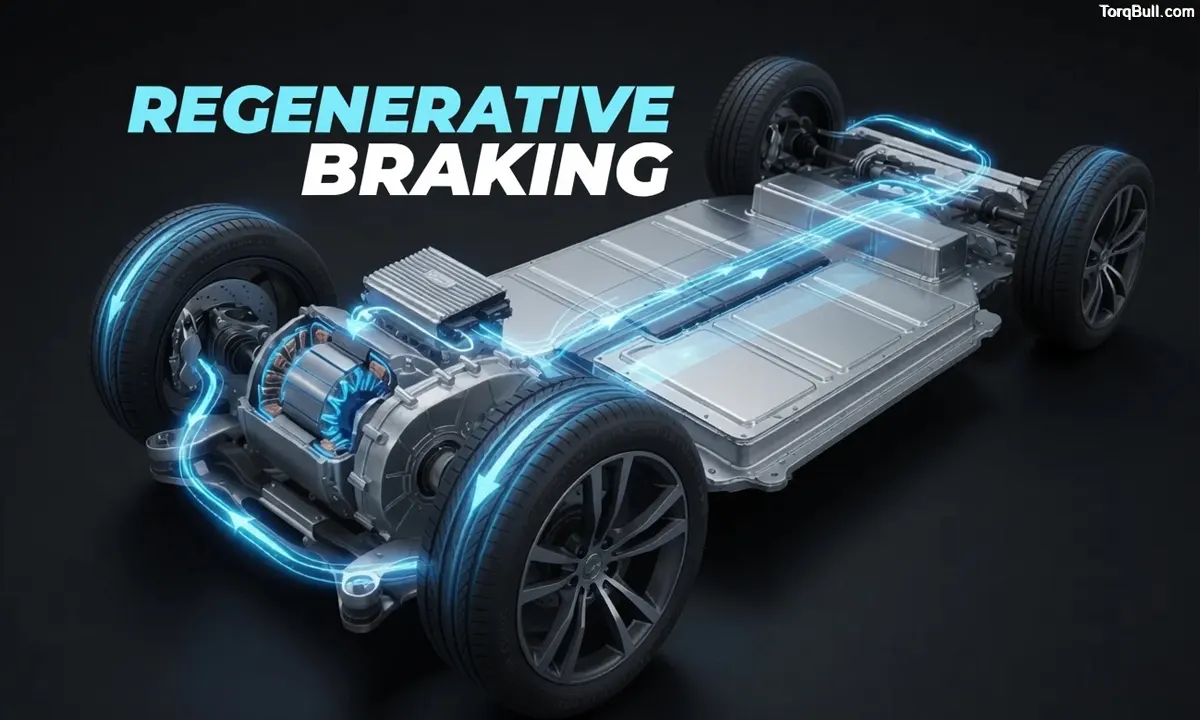
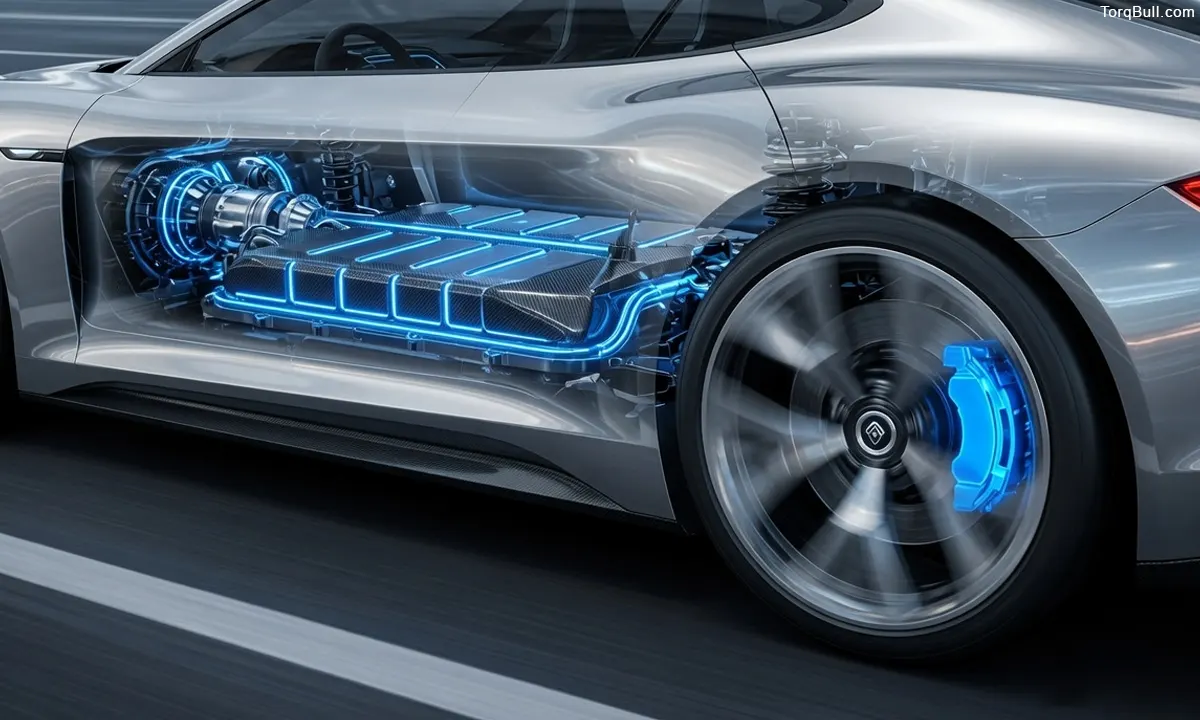
The mechanism is elegantly simple. In normal driving, electricity flows from the battery to the motor to turn the wheels. During regenerative braking, the electric motor runs in reverse, acting as a generator, slowing the vehicle while sending power back to the battery.
Here’s the clever bit. The inverter controls the motor’s torque so it acts as a brake, then converts the AC electricity the motor generates into the DC voltage the battery needs. The whole thing happens in milliseconds with almost no mechanical wear, and the only clues are a subtle rise in the battery percentage and the fact that you’re barely touching the brake pedal. Instead of dissipating your kinetic energy as useless heat through friction, regen converts it back into stored energy at 85 to 95 percent efficiency across the motor, inverter, and battery. It attacks the single biggest energy waste in city driving, and that’s why it matters.
The Two Numbers Everyone Confuses
Before I answer the range question, you need to understand the trick that fuels all the misleading claims. There are two completely different numbers, and people constantly mix them up.
The first is per-brake efficiency: how much of your car’s kinetic energy the system grabs in a single deceleration. Modern EVs often capture 60 to 70 percent of that energy inside the motor and power electronics under ideal conditions. That’s a big, impressive number, and it’s the one marketers love to quote.
The second is total range gain: how much extra driving range you get across a whole trip. That figure is far more modest, typically landing between 10 and 30 percent depending on how you drive. When someone says “regen is 70 percent efficient,” they’re talking about the first number. When you ask “how much farther will I actually go,” you want the second. Keep those straight and you’ll never be fooled by a hype headline again.
How Much Range Can You Actually Gain?
Now the real answer, and it’s a range rather than a single figure, because it hinges entirely on your driving conditions.
In city and stop-and-go traffic, regen shines brightest. All that repeated accelerating and braking gives it constant energy to recapture, and in dense urban driving, regen can reduce total energy consumption by roughly a fifth compared with friction brakes alone, boosting range on the order of 10 to 25 percent. That’s a genuine, meaningful gain you’ll see every day around town.
In mixed driving, real-world EVs recapture something like 25 to 35 percent of their braking energy, which is enough to add roughly 60 to 100 real-world miles to a 300-mile EV over time without ever plugging in. On flat, steady highway cruising, though, prepare for disappointment, because you barely brake at all, so there’s almost nothing to recover, and regen has only a minor impact on total range.
And then there’s the jackpot: long mountain descents. This is where regen becomes spectacular. Modern EVs regularly gain 15 to 25 kWh coming downhill, sometimes arriving with 10 to 20 percent more charge than at the summit. Drivers descending from Colorado’s Eisenhower Tunnel to Denver have documented gaining 70 to 90 miles of range in a single 30-minute drop, watching the battery climb from 48 percent at the top to 78 percent at the bottom, purely from gravity and regenerated braking. That’s not a gain, that’s a refuel from the sky.
Read: The Death of the Dashboard: How AI Is Reimagining Car Tech
How the Range Gain Breaks Down
Here’s the honest picture by driving condition.
| Driving Condition | Typical Range Gain | Why |
| City / stop-and-go | 10 to 25% | Constant braking to recapture |
| Hilly city (like SF) | 15 to 25% | Gravity adds recovery |
| Mixed driving | ~15 to 25% recovered | Moderate braking events |
| Flat highway cruise | Nearly 0% | You rarely brake |
| Long mountain descent | 15 to 25%+ (huge) | Gravity + heavy regen |
The Myth-Bust You Need to Hear
Let me be the honest voice here, because regen gets oversold. First, it’s recovery, not free energy from nowhere. Regen can only give back a portion of the energy you already spent accelerating, never more. It reclaims part of what would have been wasted, which is fantastic, but it’s not a perpetual motion machine.
Second, and this is the big one, regenerative braking does nothing to reduce air resistance or the rolling resistance of your tires. Those are the dominant energy losses at highway speed, and regen can’t touch them. That’s precisely why highway range gains are so small. So when you see “regen adds 30 percent range” as a blanket claim, treat it with deep skepticism. It might be true crawling through a hilly city, but it’s flatly false on a flat interstate.
What Limits or Kills Regen
A few conditions weaken or shut down regen entirely, and knowing them helps. Regen is limited primarily when the battery is nearly full, above 90 to 95 percent, because there’s no room to accept the charge, which is why the first miles of a downhill from a 100 percent charge give little regen. It also fades at very low speeds where friction brakes take over, and in extreme cold, when the battery can’t accept charge quickly. And in a genuine panic stop, the friction brakes seamlessly add extra force, because regen alone can’t stop you fast enough. Good systems blend the two so smoothly you never feel the handoff.
Your Right Foot Is the Real Lever
Here’s the truth that matters most: the biggest factor in how much range you gain isn’t the hardware, it’s you. For someone driving smoothly and efficiently, regenerative braking might increase range by about 10 percent, while a driver braking hard into every bend and then flooring it out will greatly reduce their range, because no regen system recovers everything that aggressive acceleration wastes.
The move is to drive with anticipation. Lift off early, let regen do the slowing, and avoid hard launches and panic stops. Many EVs make this easy with one-pedal driving, where releasing the accelerator slows the car aggressively and often brings it to a full stop, so you rarely touch the brake pedal in town. Heavier EVs also gain more than light ones, since more mass means more kinetic energy to reclaim, and cars with stronger regen tuning recover more than those with weak systems. But whatever you drive, a smooth right foot is your single most powerful range tool.
The Bonus Perks
Range isn’t even the whole story. Because regen does most of your everyday slowing, your friction brakes are used far less, so pads and rotors can last dramatically longer, slashing maintenance costs. You also produce less brake dust, improving air quality on busy streets. And the smooth, controlled deceleration reduces stress on the battery and power electronics over time. Once you’re used to one-pedal driving, jumping back into a gas car feels oddly old-fashioned, like the car forgot how to slow itself down.
Verdict: A Superpower, but Know Its Limits
So, how much range can regenerative braking really gain you? The honest answer is: it depends dramatically on where and how you drive, and anyone quoting a single magic number is selling you something.
In the city, regen is a genuine hero, banking a real 10 to 25 percent more range as it turns every stoplight into a tiny recharge. On hilly terrain and especially long mountain descents, it’s downright spectacular, occasionally handing back 70 to 90 miles as you coast downhill. But on a flat, steady highway, it’s largely a no-show, because you barely brake and it can’t fight the air resistance that’s actually draining your battery. And across the board, it recovers only a portion of what you spent, never more, so temper those inflated 30-percent-everywhere claims with reality.
Here’s how to get the most from it. Drive smoothly and anticipate stops, embrace one-pedal driving in town, and don’t expect miracles on the interstate. Do that, and you’ll bank a genuine, useful range boost every single day, watch your brake pads last practically forever, and get to enjoy that quietly magical feeling of refueling your car just by lifting your foot. Regenerative braking won’t double your range, and it won’t defy physics. But it turns the wasted energy of slowing down into free miles, and once you understand exactly when it delivers, you’ll drive a little smarter and go a little farther. That’s not hype. That’s just clever engineering, working quietly under your right foot.