- Annual energy cost around $638
- Insurance averages $289–$323 per month
- Home charger installation costs $500–$1,500
- EV registration fees add $50–$250 annually
- Faster tyre wear increases maintenance expenses
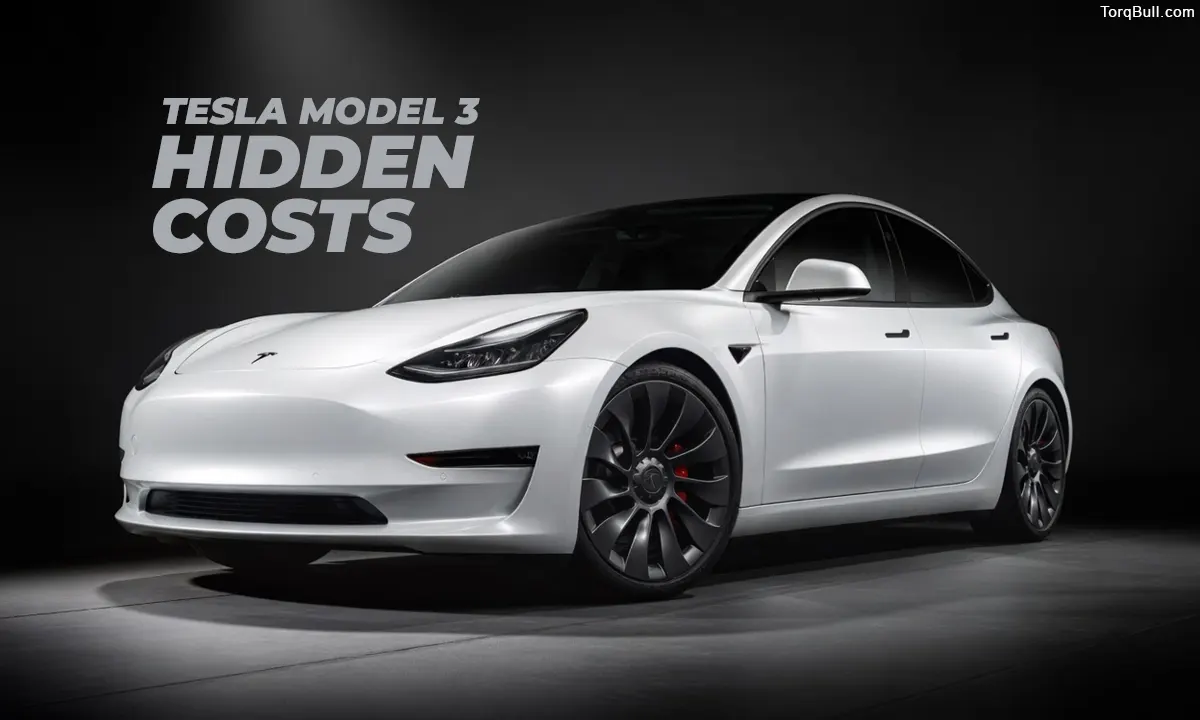
No purchase decision in the automotive market is undermined more frequently by incomplete financial planning than the Tesla Model 3 acquisition. The headline costs — the sticker price, the monthly payment and the electricity-versus-gasoline fuel comparison — are well-publicised and generally understood. The hidden costs — the expenses that do not appear in Tesla’s own marketing materials, that require research to uncover and that accumulate silently across the ownership period — are less consistently communicated and frequently produce financial surprises that well-prepared buyers could have anticipated and budgeted for. This guide identifies every material hidden cost of Model 3 ownership in the American market in 2026, quantifies each one specifically and provides the complete picture that every prospective owner needs before making a final purchase decision.
Hidden Cost 1: Home Charging Installation — $500 to $2,500
The most immediate and most commonly underestimated hidden cost of Model 3 ownership is the home charging infrastructure investment that Level 2 charging requires. Buyers who see Tesla’s $638 annual electricity cost estimate — or who calculate their per-mile energy savings against gasoline — are typically computing against a Level 2 home charging scenario. But Level 2 charging at 240 volts requires a dedicated electrical circuit that a standard home garage may not have pre-installed.
A licensed electrician must install a dedicated 240-volt, 40 to 60-amp circuit from the home’s main electrical panel to the garage or parking area. The cost of this installation ranges from $200 to $600 for a straightforward installation where the panel is close to the garage and has available capacity. If the conduit run is long, the panel is older and requires an upgrade or the installation requires local permits, the total cost rises to $1,000 to $2,500. The Tesla Universal Wall Connector hardware itself costs approximately $550 before installation. Third-party NACS-compatible Level 2 chargers — including the Emporia EV Charger at under $450 — qualify for the federal 30 percent tax credit on residential EV charging equipment, capped at $500 through 2032.
Buyers who live in apartments or condominiums without dedicated parking face a more complex charging situation. Without a home charging installation, the owner is dependent on workplace charging or public charging — which costs $0.35 to $0.50 per kilowatt-hour at DC fast chargers rather than $0.17 at home, effectively tripling the per-mile energy cost and eliminating the fuel savings that make the Model 3’s financial case most compelling.
Hidden Cost 2: Insurance Premium — $1,500 to $3,000 More Than Comparable Gas Cars Per Year
Insurance is the largest hidden cost in Model 3 ownership and the one most consistently absent from buyer calculations that focus on fuel and maintenance savings. The national average full-coverage premium for a 2026 Tesla Model 3 is approximately $289 to $323 per month — $3,468 to $3,876 annually. This compares to approximately $1,742 to $2,513 annually for a comparable Honda Accord or Toyota Camry at equivalent coverage levels.
The insurance premium differential — approximately $1,000 to $1,700 per year, or $5,000 to $8,500 over five years — is driven by three factors that are structural rather than correctable. Tesla’s aluminium body construction and tightly integrated sensor arrays make collision repairs significantly more expensive than conventional steel-body vehicles. The limited network of Tesla-certified body shops creates less competitive pressure on repair pricing. And the vehicle’s higher replacement value produces higher comprehensive and collision premiums independent of repair cost considerations.
For buyers in high-cost insurance states — California, Florida, Louisiana and Michigan — the premium differential is even more pronounced, potentially adding $2,000 or more annually above the cost of insuring a comparable gasoline sedan. This hidden cost directly and materially offsets the fuel and maintenance savings that most buyers use to justify the Model 3’s higher purchase price.
Hidden Cost 3: Accelerated Tyre Wear — $800 to $1,200 Per Set Every 20,000 to 30,000 Miles
Tyre wear is the maintenance cost where the Model 3 holds the smallest advantage over gasoline vehicles — and for some driving styles, it represents an actual cost increase relative to a comparable gasoline sedan.
The Model 3’s electric motor delivers instant, maximum torque from a standstill — a characteristic that produces extraordinary acceleration but also applies greater stress to rear tyres during launch and during spirited driving than a conventional powertrain’s gradual torque buildup. The battery pack adds approximately 1,000 pounds to the vehicle’s kerb weight compared to a mechanically equivalent gasoline sedan, increasing the tyre contact pressure and rolling wear across all four corners. Tesla recommends tyre rotation every 6,250 miles — more frequently than the 7,500-mile interval typical of most gasoline vehicles — which reflects the elevated wear rate, particularly on the driven rear tyres.
The result is that most Model 3 owners replace tyres every 20,000 to 30,000 miles rather than the 40,000 to 50,000 miles typical of a gasoline sedan’s more conservative powertrain characteristics. A set of four replacement tyres for the 18-inch Photon wheel specification costs approximately $600 to $900 installed. On the 19-inch Sport wheel or 20-inch Performance wheel specifications, replacement costs rise to $800 to $1,200 per set. Over a five-year, 75,000-mile ownership period, a Model 3 owner may replace tyres two to three times — compared to one to two times for an equivalent gasoline sedan — representing an additional cost of $600 to $1,200 over the ownership period that the fuel and maintenance savings must absorb.
Read: Tesla Model 3 Charging Mistakes to Avoid. Here Are All Six Common Mistakes and How to Correct Them
Hidden Cost 4: State EV Registration Surcharges — $50 to $250 Per Year
Electric vehicle registration surcharges exist in most American states as a mechanism for recovering the fuel tax revenue that EV owners do not contribute through gasoline purchases. These surcharges are separate from standard vehicle registration fees and can add $50 to $250 per year depending on the state.
Texas charges a $200 annual EV surcharge — among the highest in the country. Ohio charges $200. Georgia charges $211.43. California charges a variable surcharge based on annual mileage. Virginia charges $64. North Carolina charges $140.25. States without specific EV surcharges may still apply higher base registration fees to vehicles above certain value thresholds — which affects the Model 3 due to its higher transaction price relative to mainstream gasoline vehicles.
Over a five-year ownership period, state registration surcharges add $250 to $1,250 to the total ownership cost — a category that most buyers treat as equivalent to their previous vehicle’s registration cost without realising that most states now apply an EV-specific additional fee.
Hidden Cost 5: Software Features That Require Ongoing Payment
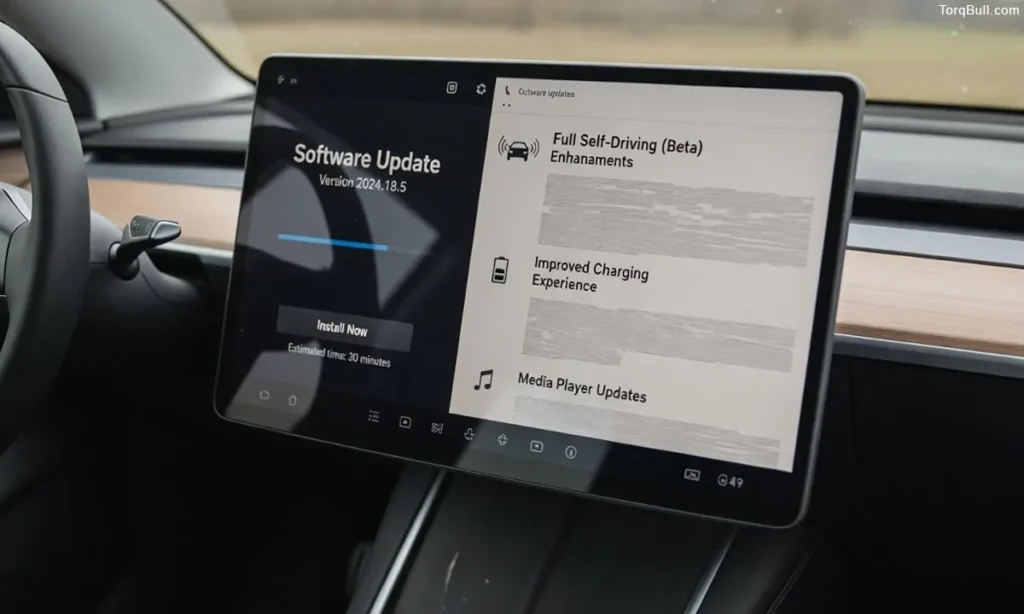
The Model 3 comes with Autopilot — basic adaptive cruise control and automatic lane keeping — as standard. But several significant software features require either a large upfront payment or a monthly subscription that buyers may not fully understand at the time of purchase.
Full Self-Driving capability is priced at $8,000 as an upfront purchase or approximately $99 per month as a subscription. Enhanced Autopilot, which adds Navigate on Autopilot, Auto Lane Change and Autopark, costs approximately $3,500 to $4,000. Premium Connectivity — which enables live traffic visualisation, satellite maps, video streaming in the car and full browser functionality — costs $9.99 per month after the included trial period expires.
These software subscriptions represent a recurring hidden cost that new buyers often underestimate because the Model 3’s base Autopilot functionality is genuinely impressive, creating appetite for the expanded capability that Full Self-Driving promises — at a cost that can add $1,200 per year in subscription fees across the ownership period if the monthly FSD subscription is maintained consistently.
Hidden Cost 6: Out-of-Warranty Body Repairs and Sensor Replacement
The Model 3’s repair cost profile in non-warranty scenarios — minor collisions, parking damage and sensor failures that fall outside standard warranty coverage — is materially higher than equivalent repair costs on conventional gasoline vehicles.
A minor rear bumper impact that costs $800 to $1,200 to repair on a conventional steel-bodied Honda Accord can cost $2,500 to $4,500 on a Model 3 if the impact requires rear sensor recalibration, bumper cover replacement using Tesla-specific parts and repair at a Tesla-certified facility. Paint correction and dent repair on aluminium panels requires specialist techniques not universally available at general body shops. A cracked or failed Autopilot camera — a non-warranty situation after the warranty period — can cost $800 to $1,500 to replace and recalibrate. These above-average non-warranty repair costs are not day-to-day expenses, but they are meaningfully more likely to occur across a multi-year ownership period than buyers anticipate when focusing on the standard routine maintenance cost advantage.
Hidden Cost 7: Supercharging on the Road — 8 to 12 Cents Per Mile
Buyers who calculate Model 3 fuel costs using the home charging figure of approximately 4.3 cents per mile sometimes overlook that road trips rely entirely on Supercharger network access at approximately 9.7 to 11.7 cents per mile — two to nearly three times the home charging rate. A Model 3 owner who makes four road trips per year averaging 500 miles each — 2,000 miles of annual Supercharger use — pays approximately $195 to $234 more for those miles than the same miles charged at home would cost. Over five years, annual Supercharger use for road trips adds approximately $975 to $1,170 to the total energy cost above the home-charged baseline. This is not a large number, but it is consistently absent from fuel cost comparisons that use only the home charging rate.
Hidden Costs of Tesla Model 3 Ownership — Complete Summary Chart
| Hidden Cost | Annual Cost | 5-Year Total | Notes |
| Home charger installation | One-time: $500–$2,500 | $500–$2,500 | Federal 30% tax credit applies to qualifying hardware |
| Insurance premium above comparable gas car | $1,000–$1,700/yr | $5,000–$8,500 | Varies significantly by state and driver profile |
| Accelerated tyre wear (above gasoline baseline) | $120–$360/yr | $600–$1,800 | Depends on driving style and wheel size |
| State EV registration surcharges | $50–$250/yr | $250–$1,250 | Varies by state; most states now charge EV fee |
| FSD / Enhanced Autopilot subscription | $0–$1,200/yr | $0–$6,000 | Optional; varies by feature selection |
| Supercharging above home rate (road trips) | $195–$234/yr | $975–$1,170 | Based on 2,000 Supercharger miles per year |
| Out-of-warranty body/sensor repairs (estimate) | ~$200–$500/yr avg | $1,000–$2,500 | Highly variable; higher than equivalent gas car |
| Total Hidden Cost Range | ~$2,065–$6,444/yr | ~$10,325–$32,220 | Wide range reflects state, usage and option choices |
The Net Picture: Hidden Costs vs Known Savings
The hidden costs of Model 3 ownership do not invalidate the Model 3’s financial case — but they do require honest integration into the total ownership calculation for that case to be presented accurately. A buyer who calculates that the Model 3 saves $4,500 in five-year fuel costs and $2,500 in five-year maintenance costs — a combined saving of $7,000 — has calculated correctly on those two items. But if that same buyer faces $5,000 to $8,500 more in insurance costs, $500 to $2,500 in home charging installation, $250 to $1,250 in EV registration surcharges and $600 to $1,800 in additional tyre costs over the same five-year period, the net financial picture is materially different from the simple fuel-and-maintenance saving.
The buyers who make Model 3 ownership most financially advantageous are those who minimise the hidden cost exposure: who select competitive insurance by obtaining multiple quotes, who install a third-party Level 2 charger qualifying for the federal tax credit rather than accepting the highest-cost installation options, who choose 18-inch wheels over larger specifications to reduce tyre wear and who match their software feature subscriptions to their actual usage rather than maintaining features they rarely engage.
Recharged’s guidance on the annual cost picture is the most useful framing: those ranges bundle every major cost — depreciation, energy, insurance, maintenance, fees and financing — and a number that sits below or above them depends on where the owner lives, how they drive and whether they buy new or used. The hidden cost analysis confirms that the buying-new-versus-used decision and the insurance provider selection are the two most financially impactful decisions available to any prospective Model 3 owner.