- The Toyota Camry is now hybrid-only, offering up to 51 MPG combined, available AWD and an impressive 86 out of 100 JD Power reliability score starting around $28,700.
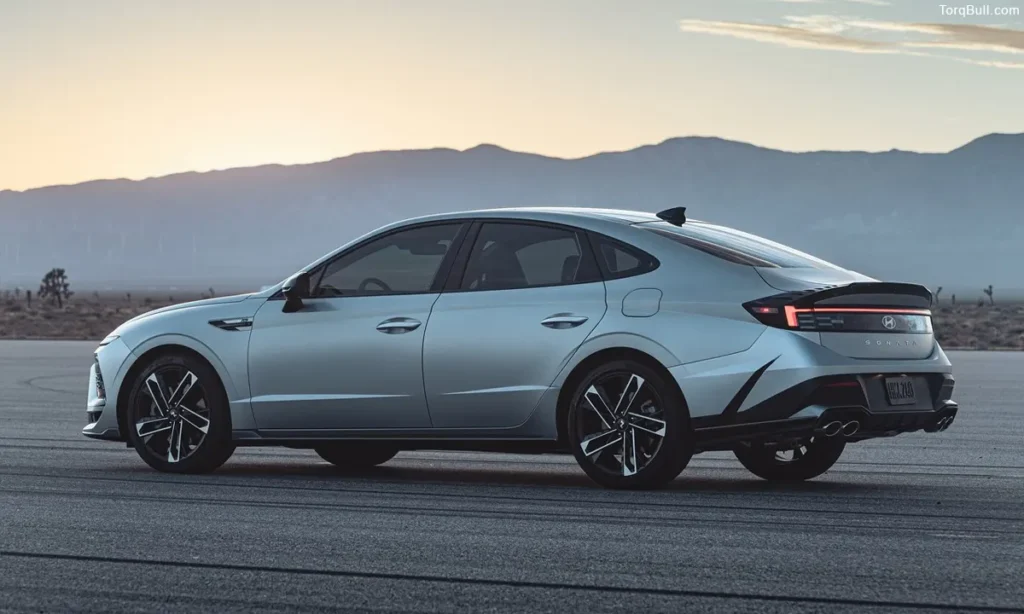
- The Hyundai Sonata counters with a lower starting price, available gas and hybrid powertrains, a standard 12.3-inch display and a powerful 290-horsepower N Line variant.
- While the Camry focuses on efficiency and long-term dependability, the Sonata stands out for technology, performance and class-leading 10-year or 100,000-mile warranty coverage.
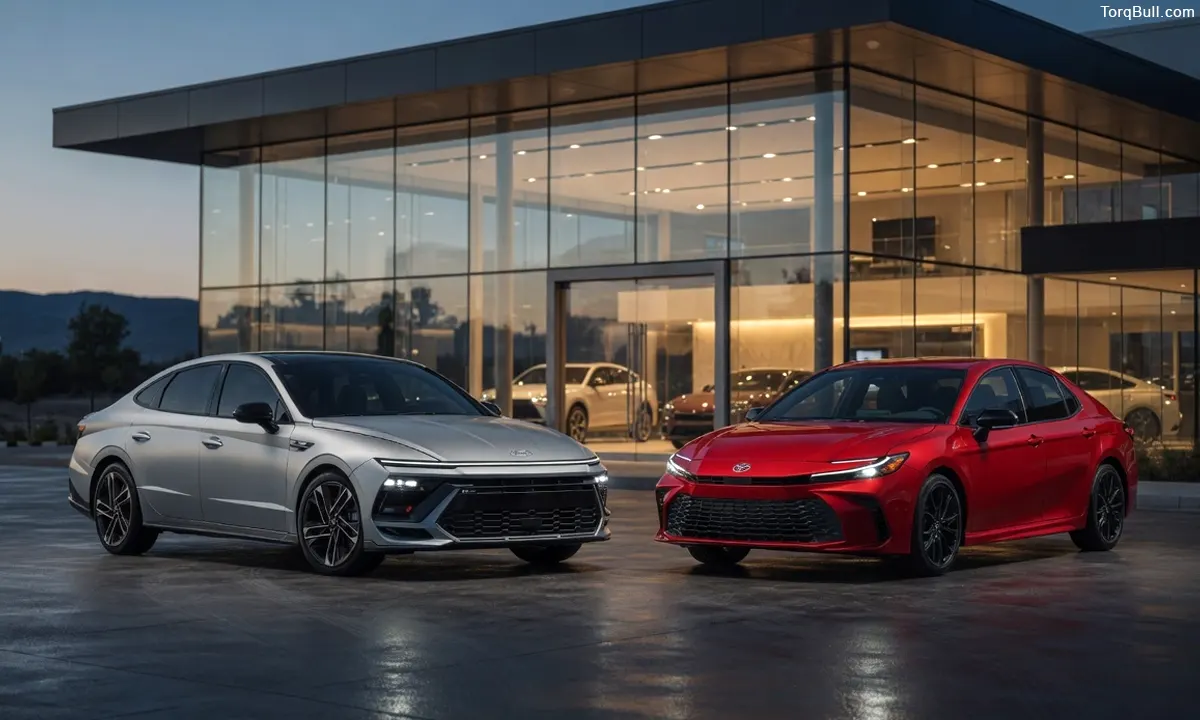
The Hyundai Sonata vs Toyota Camry comparison defines the midsize sedan segment in 2026 — two vehicles that represent the last two major players in a category that has lost the Chevrolet Malibu and Subaru Legacy after 2025, leaving buyers with a meaningful but narrower choice than a decade ago. Toyota went all-in on hybridisation for 2025, making the Camry exclusively hybrid-powered and offering available all-wheel drive — a fundamental repositioning that eliminates the gasoline-only option entirely and tilts the entire product toward efficiency. Hyundai took the opposite approach, offering the Sonata in both gasoline and hybrid configurations alongside the 290-horsepower N Line turbocharged performance variant — prioritising powertrain flexibility, technology value and the most comprehensive warranty coverage in the class. Both choices reflect genuine brand philosophy differences that produce two very different vehicles despite similar prices and segment positioning. This guide provides the complete, honest comparison that every midsize sedan buyer needs.
Price: Sonata Leads at the Entry Level, Camry Competes on Value
The price comparison between the 2026 Sonata and Camry requires careful attention to powertrain context — because the Camry’s exclusive hybrid lineup means every Camry comparison is a hybrid-to-hybrid or hybrid-to-gasoline comparison depending on which Sonata variant is in the frame.
The 2026 Hyundai Sonata SE starts at $26,900 — approximately $1,800 less than the base 2026 Toyota Camry LE Hybrid at $28,700 including destination. This $1,800 difference provides the Sonata with a genuine entry-price advantage, particularly meaningful for buyers who want the most affordable midsize sedan available. However, Autoblog’s comparison notes that when comparing equivalent hybrid trims with similar feature content, pricing is close within a few hundred dollars in most cases — the practical price difference narrows significantly above the base configuration. KBB also notes that real-world incentives, particularly from Hyundai which frequently offers additional dealer discounts, can swing effective transaction prices meaningfully from listed MSRPs.
The Sonata’s range extends to the N Line at approximately $37,000 — a configuration with no direct Camry equivalent, as Toyota discontinued the TRD performance trim for the 2025 generation. The Camry’s range peaks around $36,000 for the XSE AWD Hybrid — placing both vehicles at comparable pricing ceilings despite their divergent character at that price point.
Powertrain: Camry Goes Hybrid-Only, Sonata Offers Real Choice
The most fundamental difference between these vehicles in 2026 is the powertrain philosophy — and it is a difference that eliminates the Camry from consideration for buyers who specifically want a non-hybrid gasoline sedan.
The 2026 Toyota Camry is exclusively hybrid. Every Camry sold combines a 2.5-litre four-cylinder engine with a 100-kilowatt electric motor and lithium-ion battery, producing 225 horsepower in FWD configuration and 232 horsepower with AWD. The continuously variable transmission manages this hybrid system with the refinement expected of Toyota’s mature hybrid technology. EPA estimates reach 51 MPG combined FWD and 50 MPG combined AWD — the most fuel-efficient non-plug-in midsize sedans in the American market. Capital One’s hybrid comparison confirms that the Camry is up to 5 MPG more efficient than the Sonata Hybrid in the city — a meaningful city commuting advantage that accumulates significantly across high annual mileage.
The 2026 Hyundai Sonata offers three distinct powertrains. The base 2.5-litre naturally aspirated four-cylinder produces 191 horsepower — the only non-hybrid option in this comparison and the entry point for buyers who prefer gasoline simplicity. The Sonata Hybrid pairs a 2.0-litre engine with a 39-kilowatt electric motor for 192 combined horsepower and up to 51 MPG combined — matching the Camry’s headline hybrid efficiency figure in its most efficient configuration. The Sonata N Line turbocharged 2.5-litre produces 290 horsepower through an eight-speed wet dual-clutch — a performance configuration with no Camry equivalent whatsoever. Autoblog confirms that Toyota went all-in on hybridisation while Hyundai doubled down on value, tech and design — and the powertrain lineup is the clearest expression of those divergent priorities.
The Camry’s available AWD is its most decisive powertrain advantage over the Sonata. No version of the 2026 Sonata — gas, hybrid or N Line — offers all-wheel drive. Autoblog specifically identifies this as a notable disadvantage in the Northeast, Midwest and Mountain West where AWD is often considered essential. For buyers in snow-belt states who need AWD confidence on winter roads, the Camry is the only choice in this comparison.
Read: Hyundai Sonata Turbo Engine Real-World Test. Is It Truly Impressive?
Fuel Economy: Camry Leads in City, Hybrid Sonata Matches on Highway
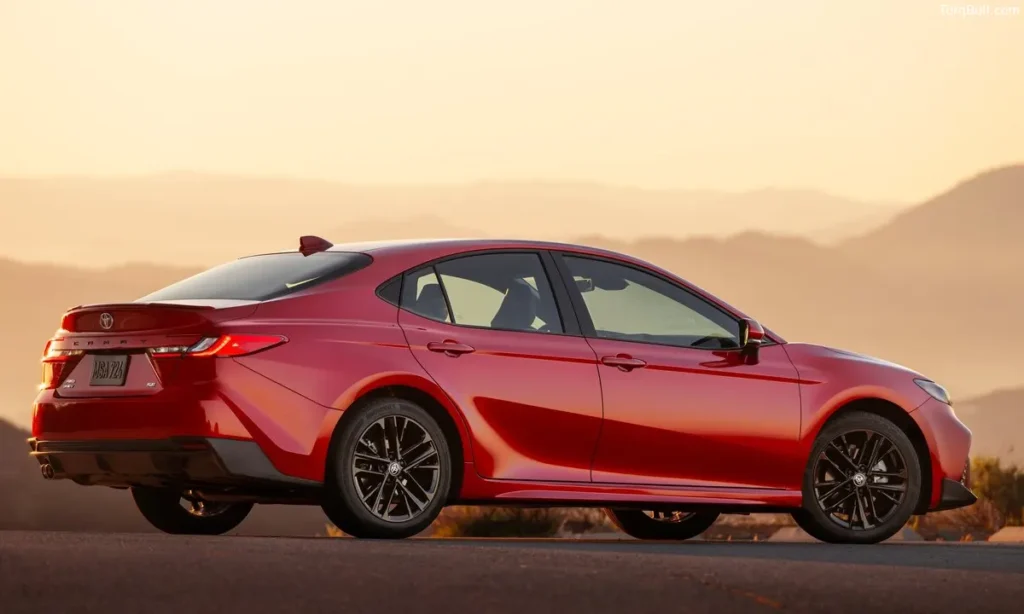
The fuel economy comparison between the Camry and Sonata Hybrid — the most directly comparable powertrain pairing — produces a nuanced result that varies by driving environment.
TrueCar’s data shows the Toyota Camry achieving 53 MPG city and 50 MPG highway — the city figure 5 MPG above the Sonata Hybrid’s 28 MPG city EPA estimate. This city efficiency gap reflects the Camry’s more powerful electric motor and more sophisticated hybrid system calibration, which recovers more energy from urban stop-and-go driving cycles. Capital One’s comparison confirms this city advantage for the Camry, noting it is up to 5 MPG more efficient in the city.
At highway speeds where both vehicles rely more on the gasoline engine, the efficiency advantage narrows considerably. Both vehicles achieve approximately 50 to 51 MPG combined in their most efficient configurations — a practical tie when the full mixed driving cycle is considered. For buyers whose driving is primarily highway-dominant, the Sonata Hybrid competes directly with the Camry’s efficiency without meaningful practical disadvantage.
Reliability and Warranty: Toyota Wins Reliability, Hyundai Wins Coverage
Reliability is the category where the Toyota Camry holds its most consistently documented competitive advantage over the Hyundai Sonata — and where the gap between JD Power scores is most directly meaningful for long-term ownership confidence.
JD Power’s reliability assessment gives the 2024 to 2026 Toyota Camry a score of 86 out of 100 — against the Hyundai Sonata’s 81 out of 100. U.S. News places the Camry at 88 in its reliability scoring. Consumer Reports ranks Toyota as the third most reliable manufacturer overall — consistently above Hyundai’s twelfth position. KBB specifically identifies better resale value as a Camry advantage, noting the Camry’s resale value is toward the top of the class while the Sonata’s is about average. For buyers who prioritise long-term durability data and resale value retention, the Camry’s reliability credentials are the most compelling argument in the comparison.
The warranty comparison reverses this verdict decisively in the Sonata’s favour. The Hyundai Sonata’s 5-year, 60,000-mile basic warranty and 10-year, 100,000-mile powertrain warranty is the best warranty coverage in the midsize sedan class — double Toyota’s 5-year, 60,000-mile powertrain coverage on both the basic and powertrain dimensions. KBB specifically identifies the Sonata’s class-leading warranty as a standout feature and notes it is rivalled only by the Kia K5 which carries the same coverage. For buyers who value warranty protection over established reliability track record, the Sonata’s coverage provides substantially greater financial peace of mind across the ownership period.
Read: Hyundai Sonata N Line Full Review 2026. The Last Affordable Performance Sedan Standing
Technology and Interior: Sonata Sets the Standard Screen Size
Technology content is where the 2026 Sonata holds its most consistently documented competitive advantage — specifically in the standard screen size that has been a persistent talking point in every comparison between these vehicles.
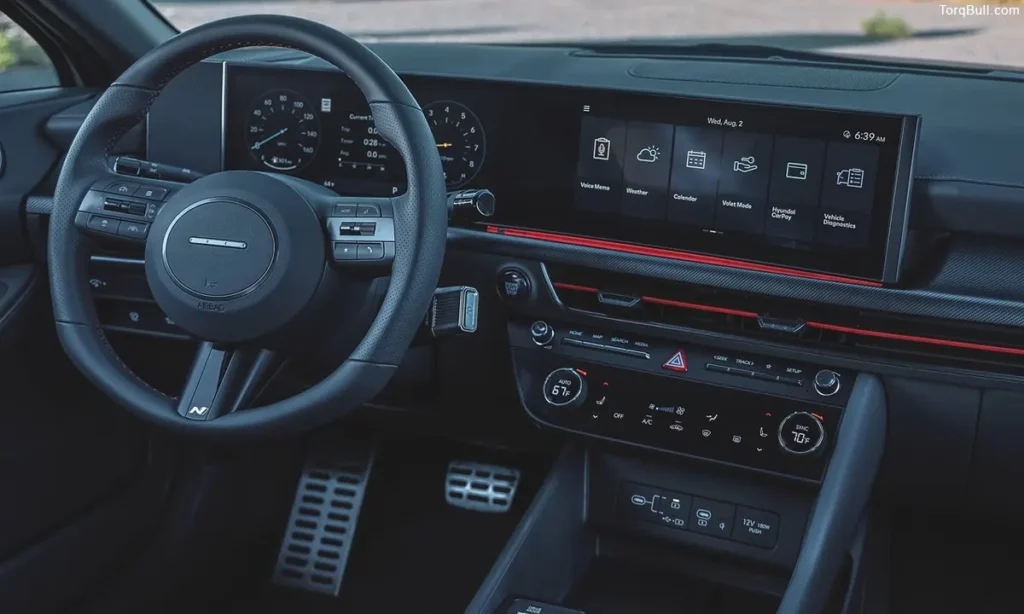
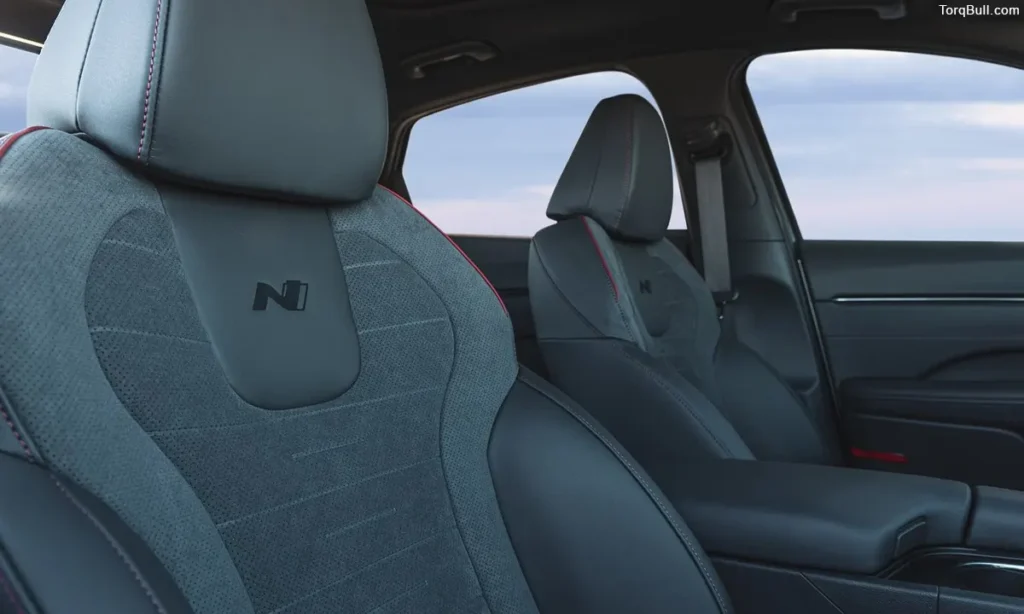
The 2026 Hyundai Sonata provides a standard 12.3-inch touchscreen infotainment display across its lineup — the largest standard screen in the midsize sedan class. KBB specifically identifies this as a feature that comes standard in the Sonata while remaining optional in the Toyota, noting the high-tech user-friendly system comes with wireless Apple CarPlay and Android Auto as standard. The Sonata additionally provides a standard wireless smartphone charging pad on models above the base SE — a convenience feature that the base Camry does not include.
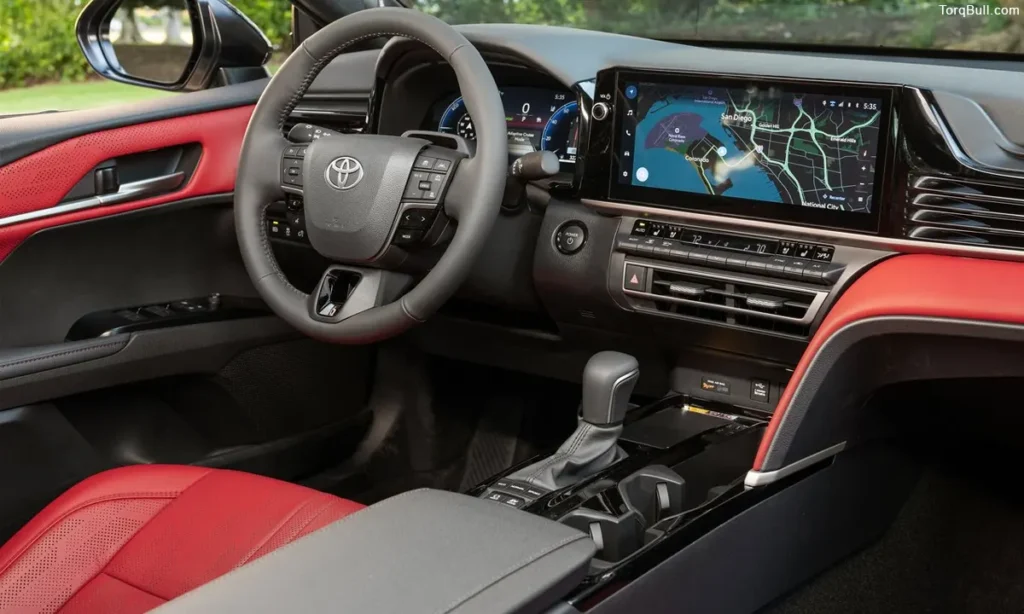
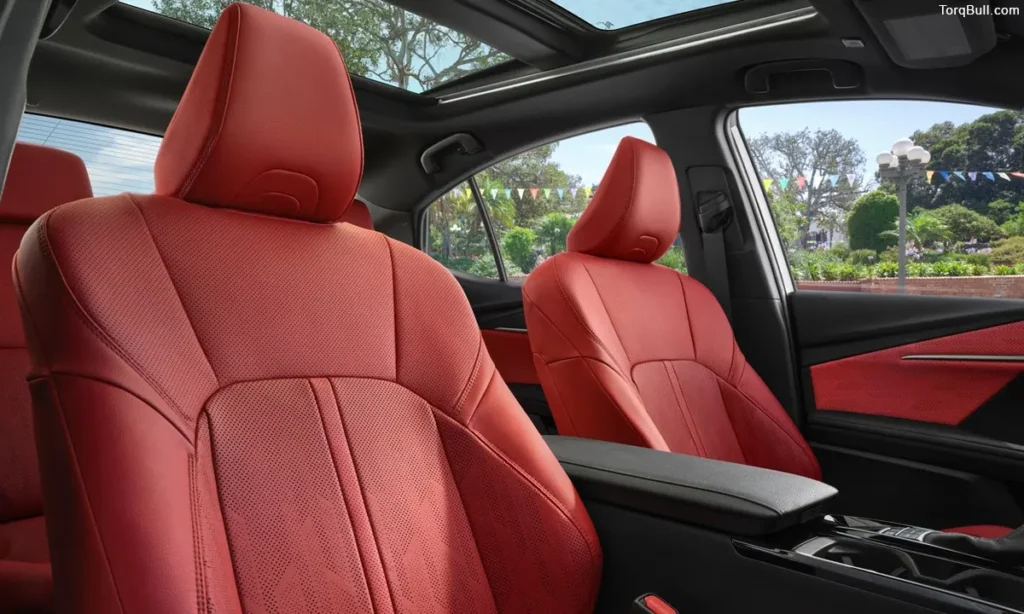
The 2026 Toyota Camry provides an 8-inch standard touchscreen — a notably smaller display that requires upgrade to upper trims for the larger screen size available on the base Sonata. Toyota does provide a 12.3-inch screen on upper Camry trims with optional JBL premium audio. Capital One’s comparison confirms the Sonata Hybrid leads with its larger trunk at 15.6 cubic feet versus the Camry’s 15.1 cubic feet — a modest but real cargo advantage.
Interior space slightly favours the Sonata on absolute volume measures, though U.S. News notes the Camry’s rear seat is more comfortable for adults due to better legroom — a specific ergonomic advantage that contradicts the Sonata’s larger total volume figure.
Hyundai Sonata vs Toyota Camry 2026 — Complete Comparison Chart
| Category | Hyundai Sonata (2026) | Toyota Camry (2026) | Winner |
| Starting Price | $26,900 (gas SE) | $28,700 (LE Hybrid FWD) | Sonata |
| Powertrain Options | Gas, Hybrid, N Line Turbo | Hybrid only | Sonata |
| AWD Availability | No | Yes (all hybrid trims) | Camry |
| Max Horsepower | 290 hp (N Line turbo) | 232 hp (AWD Hybrid) | Sonata |
| EPA Combined (hybrid) | Up to 51 MPG | Up to 51 MPG | Tie |
| City Fuel Economy (hybrid) | Up to 43 MPG city | Up to 53 MPG city | Camry |
| Standard Screen Size | 12.3-inch | 8-inch (12.3-inch on upper trims) | Sonata |
| Wireless Charging (base+) | Standard | Not standard (base) | Sonata |
| JD Power Reliability | 81 / 100 | 86 / 100 | Camry |
| Consumer Reports Mfr Rank | 12th | 3rd | Camry |
| Powertrain Warranty | 10 yr / 100,000 mi | 5 yr / 60,000 mi | Sonata |
| Basic Warranty | 5 yr / 60,000 mi | 3 yr / 36,000 mi | Sonata |
| Free Maintenance | Not offered 2026 | 2 yr / 25,000 mi (Toyota Care) | Camry |
| Resale Value | Average | Top of class | Camry |
| NHTSA Safety Rating | 5-star overall | 5-star overall | Tie |
| IIHS Safety Rating | Top Safety Pick+ | Top Safety Pick+ | Tie |
| Cargo (trunk) | 15.6 cu ft | 15.1 cu ft | Sonata (slight) |
| Rear Seat Legroom | Slightly less | More comfortable per U.S. News | Camry |
The Honest Verdict: Which Should You Buy?
The Toyota Camry is the better choice for buyers who prioritise the most proven long-term reliability in the midsize sedan class, who need all-wheel drive capability for winter driving in northern states, who want the most fuel-efficient city commuting available from a non-plug-in hybrid and who value Toyota’s complimentary maintenance and superior resale value retention. The Camry’s 86 out of 100 JD Power reliability score, Consumer Reports’ third-place Toyota manufacturer ranking and top-of-class resale value make it the safest long-term ownership bet in the midsize sedan segment.
The Hyundai Sonata is the better choice for buyers who want more than a hybrid-only powertrain — specifically those who want the N Line’s 290-horsepower turbocharged performance or who prefer a conventional gasoline engine at a lower entry price. It is also the better choice for buyers who specifically value the industry’s most comprehensive warranty coverage, a larger standard touchscreen across base trims and the flexibility of multiple powertrain options at every price point. For buyers who choose based on technology content per dollar spent, the Sonata’s standard 12.3-inch screen and wireless charging at lower trim levels represent better value than equivalent Camry configurations.
Capital One’s hybrid-specific comparison provides the clearest framing: both sedans offer comparable overall efficiency, safety ratings, features and technology, with the decision coming down to personal preference and lifestyle. The Camry’s reliability advantage and AWD availability are the tiebreakers for buyers in snowy climates or for whom longevity is the primary criterion. The Sonata’s powertrain breadth and warranty superiority are the tiebreakers for buyers who want more than a hybrid sedan can offer or who want the most warranty protection available.