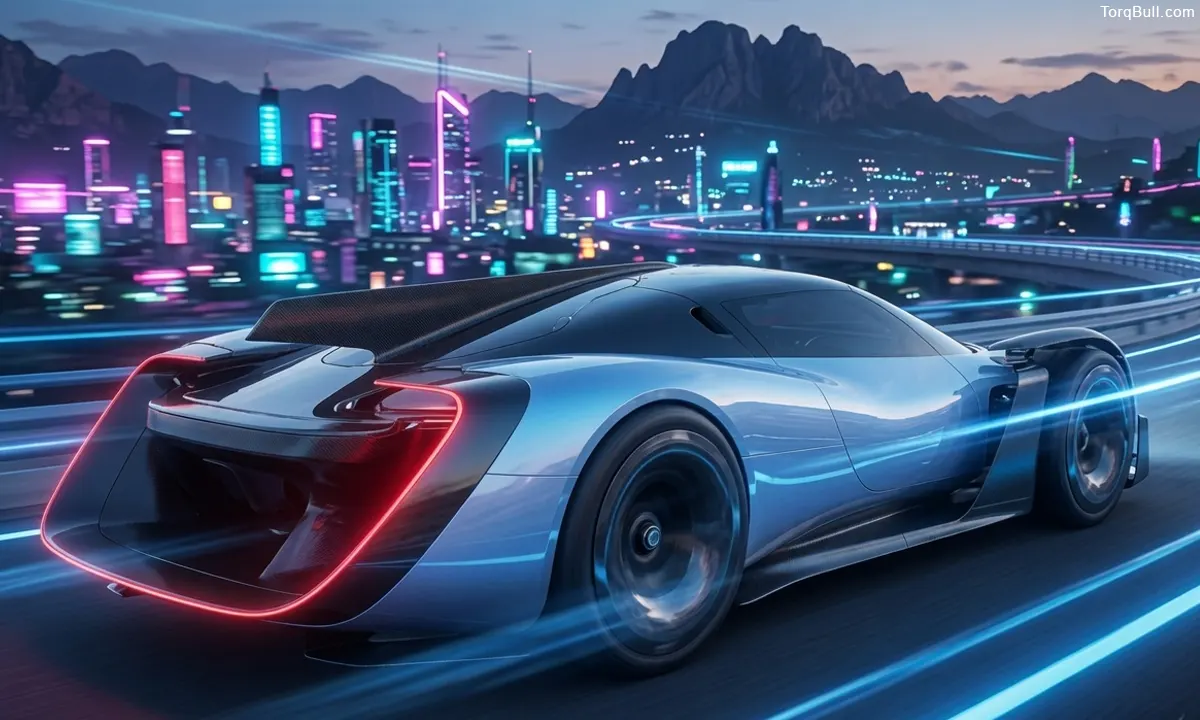
Let me be honest with you. When I first heard that Xiaomi, the company that makes the charger cable in my junk drawer and a vacuum that occasionally eats my dog’s toys, was building a 1,900 horsepower hypercar, I rolled my eyes so hard I nearly saw my own brain. Tech companies making cars usually means a rolling iPad with the structural rigidity of a wet napkin. I was ready to hate this thing.
Then I actually looked at it. And now I cannot stop thinking about it.
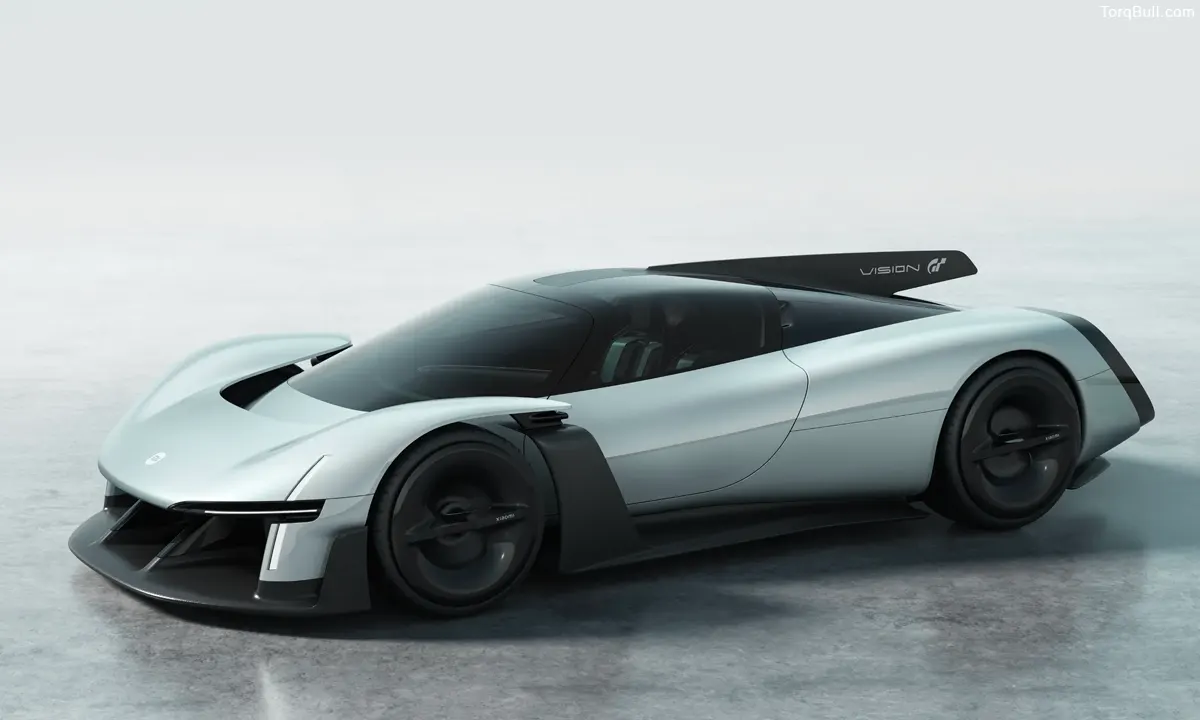
The Vision GT is not real in the way you want it to be. You cannot buy one, you cannot lease one, you cannot finance one over 84 cruel months. It will never go into production. It’s a virtual concept built for Gran Turismo 7. But here is the thing that flipped me. As of the June 11, 2026 update, you can actually drive it in the game right now. And the engineering crammed into this digital fantasy is the kind of stuff that ends up on real cars a few years down the line. So no, I am not rolling my eyes anymore. I am paying very close attention. You should too.
The Wind Did the Sculpting, and It Was Not Messing Around
Every car company on earth swears its design is “shaped by airflow.” It is the most overused phrase in the business, right up there with “driver focused” and “emotional design.” Most of the time it means somebody waved a sketch near a wind tunnel and called it a day.
Xiaomi took the phrase literally and then went feral with it. The philosophy is called “Sculpted by the Wind,” and the brief was the hardest kind to nail. Most electric hypercars cheat by picking one goal. They chase either low drag for top speed or high downforce for cornering. Xiaomi went after both at once.
That sounds like marketing fluff until you see the numbers. The car posts a drag coefficient of 0.29, a downforce figure of negative 1.2, and an aerodynamic efficiency score of 4.1, which is the ratio between negative lift and drag. Here is why I find that genuinely nuts. Those are figures that production hypercars costing millions of dollars fight to hit, and Xiaomi did it with a team that had been building cars for all of two years. Two years. I have had gym memberships longer than that.
And they did not bolt on a forest of wings to get there. The aero channels are carved straight into the bodywork, with airflow engineered into the structure instead of slapped on afterward. The teardrop cockpit and integrated channels manage the air without giant spoilers, and every structural piece is shaped with an airfoil cross section. This is Le Mans prototype thinking dressed up as a concept car, and I love it.
Wheels That Refuse to Spin (Yes, Really)
Okay, this is the part where I went from interested to obsessed.
Spinning wheels are a nightmare for aerodynamics. The rotating surface beats up the air around it and creates drag that engineers have been cursing at for a hundred years. Xiaomi’s fix is so simple and so weird that I am annoyed nobody mainstream did it first. A magnetic system underneath keeps the wheel covers perfectly still while the actual wheels spin beneath them. That wipes out the drag from rotating wheel surfaces and makes the car look like it is floating.
Picture it. The car is doing triple digits and the wheels look like they are standing still, just hovering there like the laws of physics took the day off. The covers, called Accretion Rims, have semi transparent sections that show turbine fins inside, and those fins shove air toward the brakes to keep them cool. So one trick kills drag and the other feeds the carbon ceramics. That is two birds, one ridiculously clever stone, and it is the whole personality of this car in a nutshell.
A Spoiler You Cannot Even See
The back end hides the trick I respect the most, and honestly it might be the cleverest idea on the whole car.
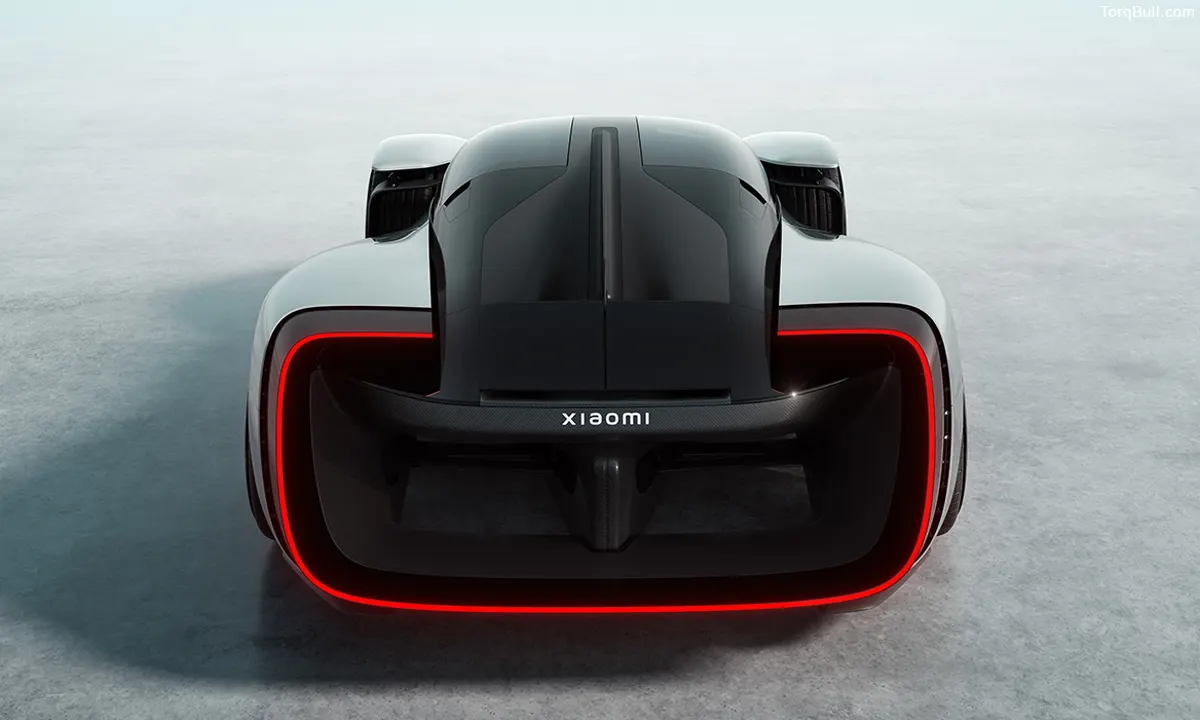
We all know the drill. Big motorized wing flips up at speed, looks cool, adds drag. Xiaomi said forget all of that. It built an Active Wake Control System, a matrix of micro perforations around the taillight that reads real time speed and angle data and actively blasts airflow to push turbulent air away from the rear. It does the job of an active spoiler while keeping the surfaces completely clean.
Let me translate. The car literally exhales to clean up its own dirty air instead of jamming a wing into the wind. It stays smooth, it stays slippery, and it keeps the balance Xiaomi was obsessing over. This is the kind of solution that makes me think a smartphone company might just understand airflow management better than some legacy outfits do. That is a wild sentence to type, and I mean every word of it.
Read: Why the 2026 Toyota C-HR Is the Ultimate Electric Commuter
The Numbers That Should Keep Stuttgart Up at Night
Context time. Let’s line the Vision GT up against the heavy hitters.
| Car | Power | Drag Coefficient | Notes |
| Xiaomi Vision GT | 1,900 hp | 0.29 | Virtual concept, 900V SiC platform, four motor AWD |
| Ferrari Vision GT | 1,337 hp | Not disclosed | The benchmark concept |
| McLaren Speedtail | 1,036 hp | 0.278 | Real, road legal, very fast |
| Xiaomi SU7 | Varies | 0.195 | Xiaomi’s own production sedan |
Two things smack you in the face here. Ferrari’s own Vision Gran Turismo concept makes 1,337 hp, so if Xiaomi’s claim holds, the Vision GT is one of the most powerful concepts the program has ever seen. And yes, the 0.29 drag number is a hair higher than the Speedtail, but the Speedtail is a single minded top speed missile. The Xiaomi is juggling drag and downforce at the same time, which is a much harder act.
The bones are legit too. It runs a 900V silicon carbide platform with four motor all wheel drive, claims a zero to 100 km/h sprint in the one second range, and tops out past 350 km/h. That is roughly 217 mph. There is a 1.4 billion dollar R&D budget behind the architecture, with center lock wheels hiding huge carbon ceramic rotors.
The Sofa Racer, and Why I Kind of Want One
Inside, Xiaomi threw the hardcore race car playbook in the trash. It ditched the traditional bucket seat for what it calls the Sofa Racer concept. The seats, doors, and dash all melt into one continuous ring shaped structure that wraps around the driver like a cocoon. Add a butterfly steering wheel with its own screen, a panoramic display across the cabin, and software that talks to your phone and your house, and you get something that feels less like a track weapon and more like a spaceship lounge that happens to hit 217 mph. Is it a little much? Absolutely. Do I want to sit in it immediately? Also absolutely.
My Verdict: Stop Underestimating This Company
Here is where I have to eat a little crow. I came in ready to dismiss this as a phone company cosplaying as a carmaker. I am leaving convinced the old guard should be sweating.
This is not some startup with a rendering and a prayer. Xiaomi delivered over 410,000 EVs in 2025, smashing its original 300,000 unit goal, and the SU7 has already outsold the Tesla Model 3 in China. The company has real hardware credibility too. It parked the Vision GT next to the SU7 Ultra, the production sedan holding the Nurburgring electric vehicle lap record at 7:04.957.
And the timing is not an accident. Xiaomi is the first tech company ever to join the Vision Gran Turismo program, becoming the 36th brand and the creator of its 51st concept. That drops its name right next to Ferrari and Porsche in front of millions of gamers, exactly as it preps a European invasion. It confirmed 2027 as its first year of overseas expansion, already runs an R&D center in Munich, and is gunning for 150 stores in the UK within four years.
So here is my honest take. You will never drive a Vision GT on a real road, but you can fire it up in the game tonight, and the ideas inside it, the floating wheels, the invisible spoiler, the relentless chase for aero balance, are the kind that show up on cars you can actually buy within a few years. The establishment spent decades earning its aerodynamic reputation. Xiaomi just strolled in and started rewriting the rules, and it did it with the confidence of a company that already knows it is winning. I did not expect to say this, but the future of the hypercar might be wearing a Xiaomi badge. Buckle up.