Picture this. You merge onto the interstate for a 500-mile road trip, and you never once stop to charge. Your EV is drinking electricity right out of the road beneath your tires, coils buried in the asphalt beaming energy up into your battery as you roll along at 70 mph. No charging stops. No range anxiety. No waiting. The battery could even be smaller, lighter, and cheaper, because the road itself is one endless charger.
It sounds like pure science fiction, and yet it’s real. Right now, on stretches of road in Detroit, France, Sweden, and Seoul, electric vehicles are charging while they drive. The technology works. The physics is proven. The pilots are running.
So why isn’t every highway in America already glowing with buried coils? Because there’s a catch, and it’s a big, expensive one. This tech sits right on the knife’s edge between genuine brilliance and colossal boondoggle, and the honest answer to which one it is depends entirely on where and how you use it. Let me break it down.
How Charging From the Road Even Works
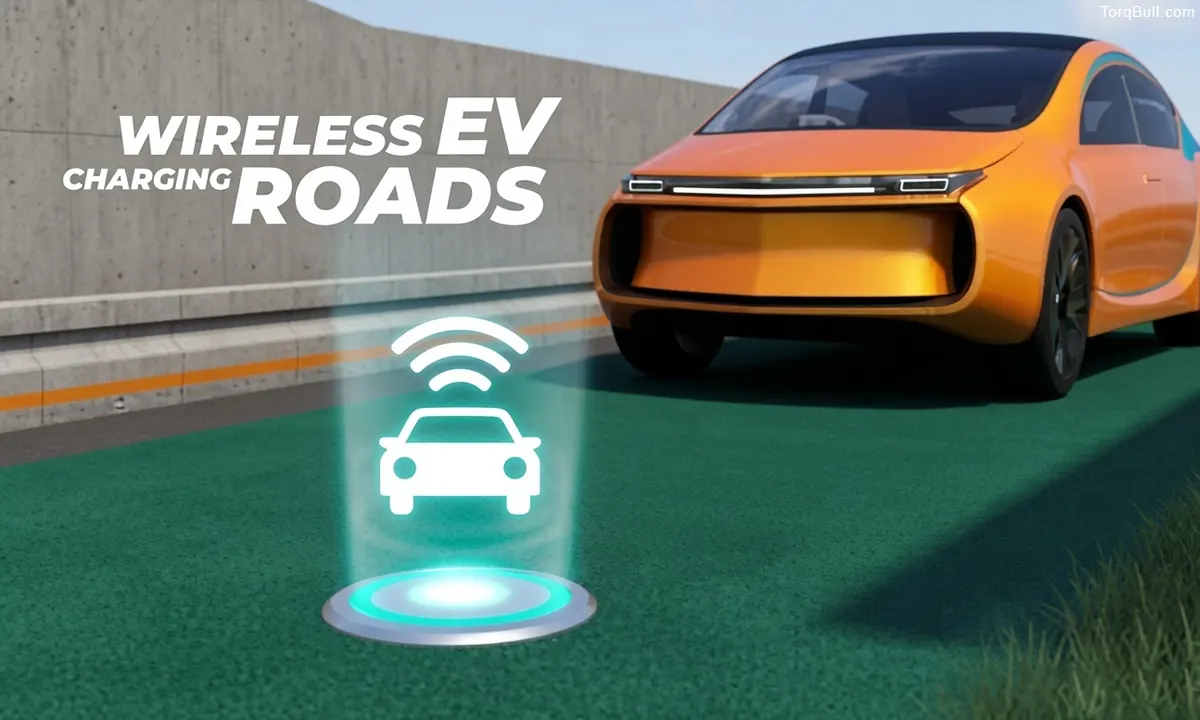
First, the magic, because it’s genuinely clever. Dynamic wireless charging uses inductive power transfer, the same principle behind the wireless pad that charges your phone, but scaled up dramatically. Transmitter coils are embedded along a section of roadway, generating a magnetic field, and vehicles fitted with a receiver coil charge as they drive over the energized coils.
It’s essentially a line of interconnected charging pads. As a compatible vehicle passes over each coil, it gets a jolt of power, and those jolts add up to a meaningful charge as the car rolls across the series. There’s a safety handshake too: before any high-power field switches on, the car and the road exchange a low-power communication signal to confirm everything’s aligned and safe. The key phrase, though, is “vehicles fitted with a receiver coil.” Your current EV almost certainly doesn’t have one, and that detail matters enormously, as we’ll see.
The Brilliant Case: It Actually Works
Let’s give the dream its due, because the upside is genuinely thrilling. The obvious win is killing range anxiety, since charging while driving means fewer stops and, in theory, near-unlimited range on an equipped corridor.
But the deeper, smarter benefit is about batteries. Dynamic charging could let EVs, particularly big trucks and buses, get by with much smaller batteries, which means less battery weight to haul around, cheaper vehicles, greater payload capacity, and reduced demand for rare-earth metals. For freight, that’s transformative. A truck that charges as it drives doesn’t need to lug two tons of battery, so it can carry more cargo and cost less. That’s a real business case, not just a gimmick.
And this isn’t lab fantasy. The pilots are delivering. France’s A10 motorway project has achieved peak outputs exceeding 300 kW, with heavy trucks, buses, and passenger cars all charging smoothly at full speed. Detroit became the first US city to embed charging coils beneath a stretch of 14th Street. Sweden is building what it calls the world’s first permanent electrified highway, with plans for 3,000 kilometers of electric roads by 2035. And Seoul has been running dynamic-charging bus lanes for over a decade. The technology, in the right setting, plainly works.
The Billions-Wasted Case: Follow the Money
Now the cold shower, because the reasons this isn’t everywhere already are brutal. Start with cost. Detroit’s pilot rang in at about $2 million per mile. Let that sink in. And a French estimate placed a nationwide electric-road rollout at €30 to €40 billion. Building these roads is significantly more expensive than traditional highway construction, requiring not just the coils but road resurfacing, upgraded power lines, and new grid interface points. You’re not paving a road, you’re paving a power plant.
Then there’s the chicken-and-egg problem that could sink the whole thing. Only vehicles equipped with a special receiver coil can use these roads, and retrofitting an existing car is theoretically possible but not likely to become common practice. So you’d spend billions electrifying a highway that the overwhelming majority of cars physically cannot use. Build it and they might not come, because they can’t.
Durability is another lurking nightmare. Coils embedded in roads face heavy traffic, brutal weather, freeze-thaw cycles, potholes, and routine road maintenance, and their long-term reliability is genuinely uncertain. Digging up a highway to fix a buried coil is not cheap. And history offers a warning: BMW’s wireless charging pilot ended without mass production, Berlin abandoned inductive charging for its main bus fleet, and many pilots have stalled primarily for financial reasons. Almost every electric road operating today is still a test or temporary pilot, not a permanent installation.
The Counterargument That Could Kill It
Here’s the argument that keeps me up at night if I’m rooting for e-roads: better batteries and faster chargers might make the whole idea unnecessary for regular cars. The entire premise of charging while driving is that stopping to charge is slow and painful. But that problem is being solved from another direction, fast.
Solid-state batteries are arriving, with some designs boasting far higher energy density, over 1,000 charging cycles while retaining 95 percent capacity, and 10-to-80-percent charging in around 12 minutes, with claims of lasting up to 40 years. Meanwhile, megawatt flash charging can already add hundreds of miles in about five minutes. If your EV can go 600 miles and recharge in the time it takes to buy a coffee, why on earth would a government spend $2 million a mile burying coils under every highway? The problem e-roads solve for passenger cars may simply evaporate.
Read: EV Battery Size vs. Charging Time: The Simple Trick to Calculate It
Where It Makes Sense (and Where It Doesn’t)
So here’s the reframe that cuts through the hype and the cynicism. This isn’t a question of brilliant everywhere or wasteful everywhere. It’s about targeting.
| Best Fit | Poor Fit |
| High-volume freight corridors | Every public highway |
| Fixed-route buses and transit | Random private passenger cars |
| Ports, depots, last-mile fleets | Rural low-traffic roads |
| Static pads in garages/taxi ranks | Retrofitting existing car fleets |
The pattern is clear. Electric roads make sense where vehicles are predictable, high-utilization, and benefit hugely from smaller batteries, which is exactly why experts say high-volume freight corridors are likely to become the first large-scale deployments, and why the smart approach is to be strategic about where it makes sense and where the good business models are. A bus that loops the same route all day, charging constantly, is a fantastic ROI. A private sedan that drives an electrified mile once a month is a terrible one.
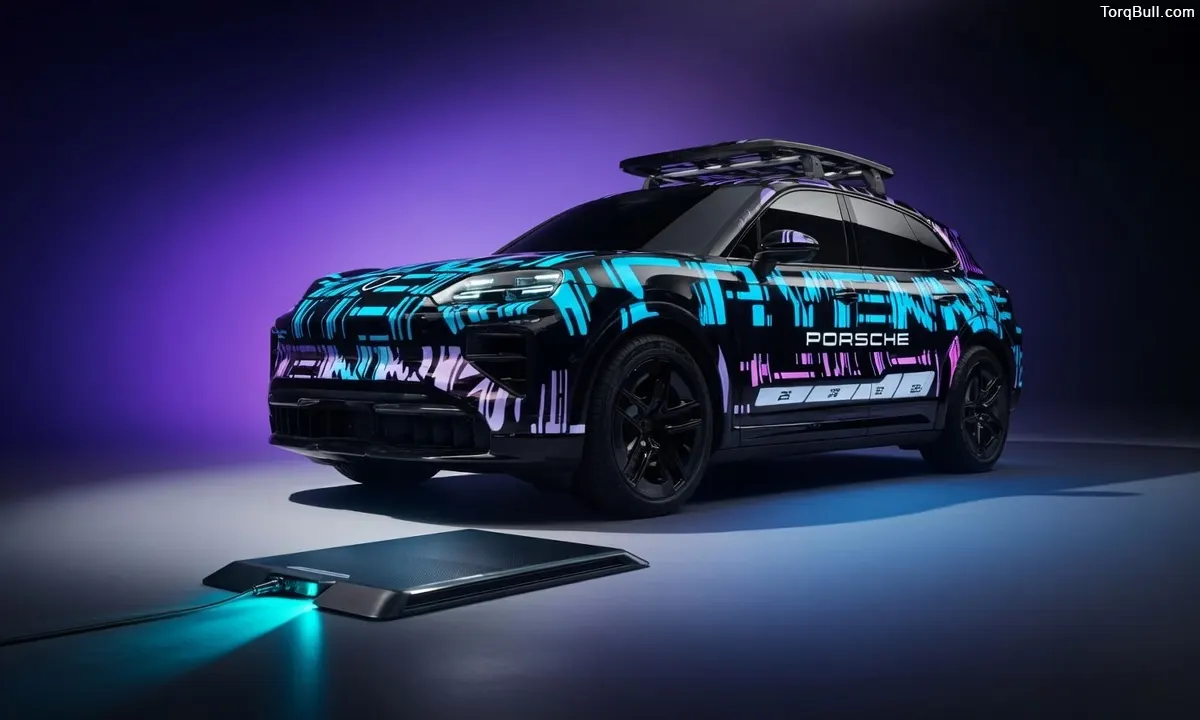
There’s also a quieter, more practical cousin worth noting: static wireless charging, where you simply park over a pad. That version is roughly 92 percent efficient, only 1-to-2 percent less than plugging in, and it’s nearly market-ready, with companies retrofitting a Mustang Mach-E and Model 3 and deploying pads for bus fleets. For consumers, park-and-charge is the near-term wireless win, not the electric highway.
Verdict: Both, Depending on the Blueprint
So, wireless EV charging roads: brilliant tech or billions wasted? My honest answer is that it’s genuinely both, and anyone giving you a clean yes or no is selling something.
As a surgically targeted tool, it’s brilliant. For high-volume freight corridors, fixed-route buses, ports, and commercial fleets, dynamic wireless charging is a legitimately smart bet. It lets those vehicles run smaller, cheaper, lighter batteries while hauling more payload, the coils get used constantly enough to justify the cost, and the pilots in France, Sweden, and Seoul prove it works reliably at full speed. Deployed this way, as part of a broader charging ecosystem rather than a replacement for it, e-roads are a genuinely exciting piece of the transport future.
But as a grand vision to electrify every highway for private passenger cars, it risks being billions wasted. The cost is staggering, the chicken-and-egg receiver problem is real, the long-term durability of coils buried under pounding traffic is unproven, and, most damning of all, rapidly improving solid-state batteries and five-minute megawatt charging may make the whole “charge while you drive” pitch redundant for regular cars before the concrete even cures. Spending tens of billions to pave America with coils, when a better battery and a faster plug might solve the same problem for a fraction of the cost, would be a classic case of expensive technology chasing a problem that’s already being solved more cheaply.
Here’s where I land. I love this technology, and I want it to succeed, but I want it deployed with a scalpel, not a firehose. Build electric roads on the freight corridors and bus routes where the math genuinely works, roll out static wireless pads for fleets and consumers who value the convenience, and let the relentless march of battery and fast-charging tech handle the private passenger car. Do that, and wireless charging roads are brilliant. Try to pave every highway in the country and hope the cars show up, and you’ve got yourself a multi-billion-dollar monument to good intentions. The tech isn’t the problem. The blueprint is everything. Choose it wisely, and the road really could be the charger. Choose it foolishly, and it’s just the most expensive asphalt ever poured.