- Top ratings: Edmunds #1 EV (2026), U.S. News 9.1/10
- Strong performance, range and charging network advantage
- Touchscreen-only controls require adjustment
- No Apple CarPlay or Android Auto support
- Home charging setup adds upfront cost
- Insurance premiums can be higher than expected
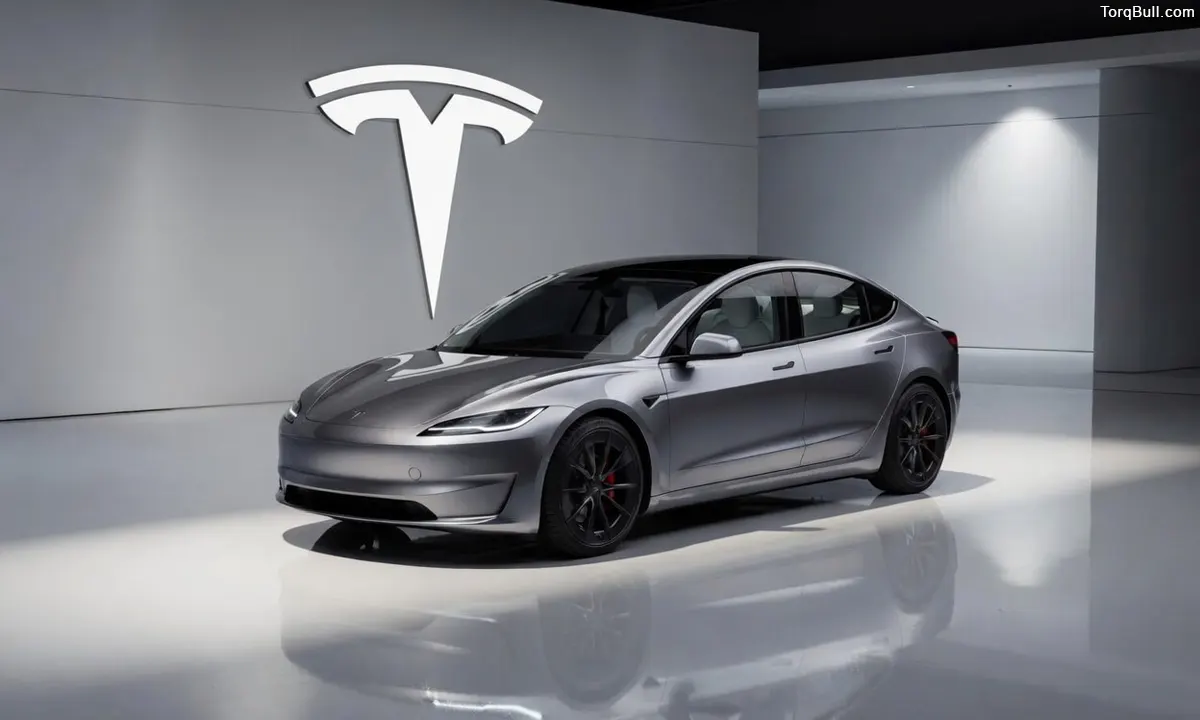
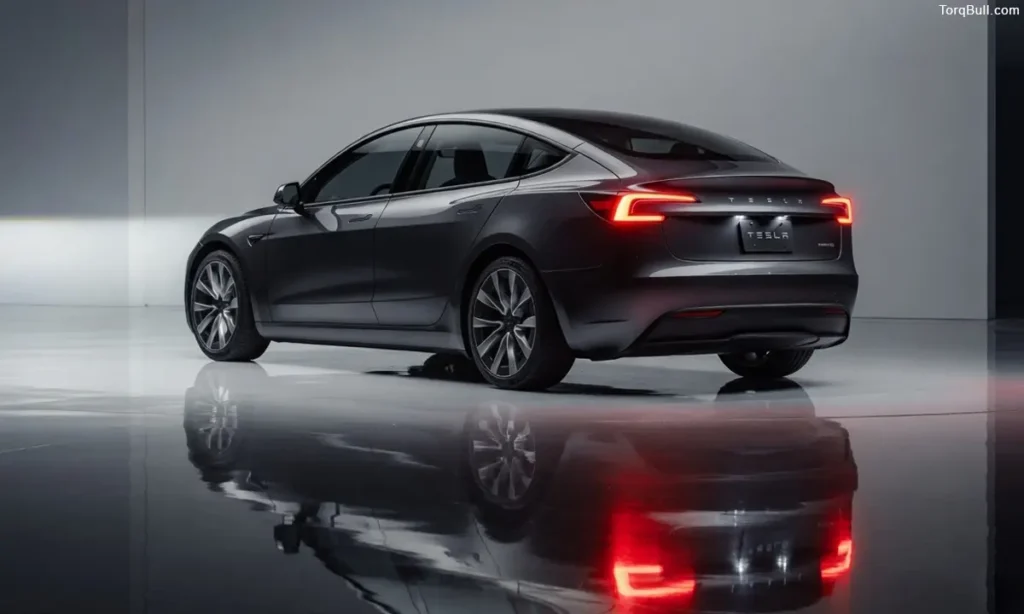
The Tesla Model 3 is the electric vehicle that most first-time EV buyers encounter first in their research — because it is the best-selling EV in the United States, the benchmark against which every competitor is measured and the vehicle most frequently mentioned when gasoline car owners ask what electric car they should consider. Its 9.1 out of 10 score from U.S. News, its designation as Edmunds’ Top Rated Electric Car for 2026 and its 90 percent owner recommendation rate from KBB all suggest that it is an excellent choice. For many first-time EV buyers — particularly those who home-charge, who drive moderate to high annual mileage and who are comfortable with technology-forward design — it genuinely is. But first-time EV buyers face a specific set of challenges distinct from experienced owners, and the Model 3’s specific strengths and limitations interact with the first-time EV experience in ways that deserve honest and complete assessment before the purchase decision is made.
Read: Is the Tesla Model 3 Worth It in USA in 2026? The Honest Answer
Why the Model 3 Makes an Excellent First EV for Many Buyers
The Range Is Generous Enough to Eliminate Range Anxiety for Most Daily Drivers
The most common concern among first-time EV buyers is range anxiety — the fear of running out of charge before reaching a destination. The Tesla Model 3’s range addresses this concern more decisively than any competing EV at a comparable price point. The base Standard RWD delivers 321 miles of EPA-rated range. The Premium RWD extends that to 363 miles. Even in real-world conditions at highway speeds with climate control running, the Long Range AWD consistently delivers 280 to 310 miles — well above the 37-mile average American daily driving distance.
For a first-time EV buyer transitioning from a gasoline vehicle, discovering that the car covers a full week of typical commuting on a single charge before needing a top-up is one of the most consistently positive early ownership revelations. EVDances’ owner guide captures this experience precisely: the Model 3 balances cost, range, charging convenience and software features in a way few rivals match. The range generosity makes the transition from gasoline car psychology — where a quarter tank prompts anxiety — to EV psychology — where 80 percent charge means three to four days of commuting remain — feel natural rather than stressful.
The Supercharger Network Makes Road Trips Genuinely Simple
The fear of running out of charge on a long trip — the most acute form of range anxiety — is directly addressed by the Tesla Supercharger network’s approximately 2,000 stations across the United States. When a first-time EV buyer sets a long-distance destination in the Model 3’s navigation system, the car automatically plans all necessary Supercharger stops, shows exactly how long each stop will take, preconditions the battery before arrival and updates the plan in real time if driving conditions change. The experience requires no third-party apps, no independent research and no uncertainty about whether a charger will be available or functional when arriving.
For first-time EV buyers specifically, this automatic trip planning removes the most technically intimidating aspect of the EV transition. Edmunds’ 2026 review specifically praises the Model 3’s approach to charging integration, noting that the navigation planning is seamless and reliably accurate. EV Help Hub’s review confirms that native Supercharger access — without requiring adapters or external apps — remains one of the Model 3’s most practically valuable advantages over competing EVs.
Autopilot Reduces Long-Drive Fatigue From Day One
Every Model 3 includes Traffic-Aware Cruise Control and Autosteer lane-centering as standard features — a level of driver assistance that many competing vehicles charge $1,500 to $3,000 extra to include. For a first-time EV owner who is also a first-time advanced driver assistance user, the combination of Autopilot with the Model 3’s excellent range and Supercharger integration transforms multi-hour highway drives into significantly less fatiguing experiences than comparable trips in a conventional gasoline car.
U.S. News’ road test of the 2026 Premium AWD confirms that Autopilot’s functioning is natural and progressively trusted by new users — the system’s behaviour is predictable enough to build confidence quickly, and the requirement for periodic steering input reminds drivers to remain attentive without being intrusive in normal highway conditions.
The Running Cost Revelation: Fuel and Maintenance Transform Monthly Budgets
First-time EV buyers consistently report that the fuel cost reduction is one of the most immediately impactful and emotionally satisfying aspects of the transition — because it is a saving that appears in every fuel stop that never happens. A Self Financial study confirmed the Model 3’s annual energy cost at approximately $638 at home charging rates — compared to $1,540 or more for a comparable 30 MPG gasoline vehicle at $3.08 per gallon. For a first-time EV buyer who has been spending $150 to $200 per month on gasoline, discovering that the equivalent cost drops to $50 to $55 per month at home-charging rates is the kind of concrete, monthly financial improvement that validates the purchase decision more powerfully than any specification comparison.
Read: Common Problems With Tesla Model 3. These 5 Things Break Often Enough That Every Owner Should Know
Where the Model 3 Creates Challenges for First-Time EV Buyers
The Home Charging Infrastructure Investment Is Not Optional
The most common practical surprise for first-time EV buyers — not just Model 3 buyers, but all EV buyers — is discovering that home charging infrastructure is not automatically available. Most buyers assume the car charges from any standard household outlet overnight. A standard 120-volt Level 1 outlet adds approximately 3 to 5 miles of range per hour — adequate for drivers covering fewer than 20 miles daily but insufficient for most American commuters. A meaningful overnight charge requires a 240-volt Level 2 circuit, which requires installation by a licensed electrician at a cost of $200 to $2,500 depending on the home’s electrical infrastructure.
For first-time EV buyers who live in apartments or condominiums without dedicated parking, the charging situation is significantly more complex — public charging at DC fast charger rates of $0.35 to $0.42 per kilowatt-hour raises the per-mile energy cost to 8 to 12 cents, substantially reducing the fuel savings that make the Model 3’s financial case compelling. The EVDances buyer guide identifies this as one of the major ownership pitfalls for new EV owners: ignoring the charger installation step before or at purchase.
The Touchscreen-Only Controls Have a Real Learning Curve
The Model 3’s touchscreen-centric control philosophy — where climate adjustment, wiper speed, mirror positioning and most other vehicle functions require touching the 15.4-inch screen rather than physical buttons — is one of the most consistently cited sources of early ownership friction for new buyers. U.S. News specifically notes in its 2026 road test: “I’m still not a fan of Tesla’s on-screen shifter” — a sentiment that appears across multiple first-time owner accounts. Edmunds confirms that some owners are frustrated with complicated controls, and the evdances owner guide lists ignoring the control interface adjustment period as a common new-owner mistake.
The learning curve is real but finite. Most owners report adapting to the touchscreen interface within two to four weeks of daily driving — at which point the logic of the interface becomes natural and the frustration diminishes substantially. The 2026 model’s restoration of physical turn signal stalks represents a meaningful improvement over the 2024 to 2025 models that replaced them with steering wheel buttons — reducing one of the most acute early-ownership control complaints. But buyers who strongly prefer physical buttons and knobs for all primary vehicle controls should experience the Model 3 as a daily driver before committing.
The Absence of Apple CarPlay and Android Auto Is a Daily Friction Point
For first-time EV buyers who are accustomed to iPhone or Android navigation, Spotify, podcasts and messaging through their phone’s integrated interface, the Model 3’s lack of Apple CarPlay and Android Auto creates a daily friction that does not fully resolve through the vehicle’s native alternatives. Tesla’s built-in navigation, Spotify integration and entertainment system are genuinely capable — but they are not the same as the smartphone ecosystem buyers already use, trust and have personalised. Edmunds specifically flags the absence of smartphone integration as a frustration for some buyers, and EV Help Hub identifies it as one of the most commonly raised first-owner complaints in the review community.
Insurance Costs Arrive as a Financial Surprise
The insurance premium for a Model 3 averages approximately $289 to $323 per month nationally — $1,000 to $1,700 more per year than equivalent coverage on a comparable gasoline sedan. For first-time EV buyers who budgeted based on fuel and maintenance savings without factoring in the insurance differential, this elevated premium arrives as an unwelcome monthly surprise that partially offsets the running cost benefits. Obtaining insurance quotes before finalising the purchase — and specifically requesting quotes from State Farm, USAA for eligible buyers, and Travelers as the most consistently competitive mainstream insurers — is the most actionable advice for managing this cost.
The Key Questions Every First-Time EV Buyer Should Answer Before Choosing the Model 3
Can you charge at home? This is the single most important prerequisite question. A first-time EV buyer with a dedicated garage or parking space and a home electrical panel that can support a 240-volt circuit will find the Model 3 an excellent daily companion. A first-time EV buyer in an apartment who depends entirely on public charging should understand that the economics and convenience of Model 3 ownership change substantially without home charging access.
Are you comfortable with a technology-first interface? The Model 3 rewards tech-comfortable buyers who approach the touchscreen interface with patience and willingness to learn. It frustrates buyers who strongly prefer traditional automotive control layouts. Spending 30 minutes in a Model 3 at a Tesla showroom or through a test drive before purchasing resolves this question empirically.
Is your daily commute within comfortable range of the Standard RWD? The Standard at $36,990 with 321 miles of range is Edmunds’ recommended trim and represents the most financially efficient entry point into Model 3 ownership for first-time EV buyers with typical commuting patterns. Buyers who regularly make long-distance trips or who want additional range comfort should consider the Premium RWD at $42,490 for 363 miles of range.
First-Time EV Buyer Guide: Is the Model 3 Right for You? — Reference Chart
| Buyer Profile | Model 3 a Good First EV? | Key Reason |
| Home charger, 15K+ miles/yr, tech-comfortable | Strongly yes | Range + network + savings compound fully |
| Home charger, moderate mileage, family sedan user | Yes | Best-in-class range handles all daily needs |
| Apartment dweller, no home charging access | Neutral to no | Public charging costs eliminate most savings |
| First EV buyer wanting Apple CarPlay | Conditional | Must accept Tesla’s native system instead |
| Buyer needing large cargo space (SUV equivalent) | Consider Mach-E or Model Y instead | Sedan cargo limits are meaningful for families |
| Budget-first buyer, short ownership | Consider used Model 3 | New-vehicle depreciation offsets savings |
| Cold-climate buyer (MN, ND, WI) | Yes with awareness | Heat pump on Highland gen improves winter range |
| Tech enthusiast, first EV, road trip driver | Strongly yes | Supercharger network removes anxiety completely |
The Honest Verdict for First-Time EV Buyers
The Tesla Model 3 is an excellent first EV for buyers who match the profile it was designed for: home-charging commuters and mixed-use drivers who cover moderate to high annual mileage, are comfortable with technology-forward design and want the most complete charging infrastructure ecosystem available in the American EV market. For these buyers, the transition from gasoline to EV ownership through the Model 3 is the smoothest, most feature-complete and most financially validated experience available in the segment.
It is a less straightforward choice for buyers without home charging access, those who rely heavily on Apple CarPlay or Android Auto as daily tools, those who need the cargo volume of a compact SUV rather than a sedan and those whose insurance profile places them at the upper end of the Model 3’s elevated premium range.
The Model 3 remains what Edmunds, U.S. News and the owner community consistently confirm it to be: the benchmark electric vehicle — the one against which every first-time EV buyer’s alternatives should be measured, even if the verdict for some specific buyer profiles ultimately points elsewhere.