If you have spent any time around EV skeptics, you know the prophecy by heart. Sure, the electric car is cheap to run now, they say, but just wait. Around 100,000 miles, that battery is going to fall off a cliff, your range will collapse, and you will be staring down a replacement bill the size of a used car. The battery is a ticking time bomb, and you are a sucker for ignoring it.
It is a genuinely scary story, and it has kept a lot of people from going electric. So I went digging into what real US drivers are actually experiencing after they cross that dreaded 100,000-mile mark, using the massive real-world datasets that now exist in 2026. And what I found surprised me, because the gap between the fear and the reality is enormous.
Here is the short version: the catastrophic battery-death narrative is, for the vast majority of modern EVs, largely a myth. But, and this is important, it is not pure magic either. Let me show you exactly what the data says, the good and the genuinely cautionary, so you can judge for yourself.
What’s Actually Happening at 100,000 Miles
Let’s go straight to the number everyone fears most. What do real EVs look like after 100,000 miles? The answer, across multiple datasets, is reassuringly boring. They are mostly fine.
The real-world capacity retention figures are strong. Crowd-sourced and fleet data show the Tesla Model 3 and Y with LFP batteries retain about 92 percent of capacity at 100,000 miles, and the NCA versions about 90 percent. Other popular models hold up similarly well. Data beyond 150,000 km shows the Ioniq 6 and Lucid Air still holding 92 percent, and the EV6 and EQS around 91.5 percent.
Read those numbers again. After 100,000 miles, a typical modern EV has lost somewhere in the neighborhood of 8 to 10 percent of its capacity. That is not a cliff. That is a gentle slope. A 300-mile EV becomes roughly a 270-mile EV. Annoying if you are counting every mile, but a very long way from the worthless brick the doom-mongers promised.
The Big Datasets Back It Up
A couple of anecdotes prove nothing, so let’s look at the large-scale studies, because they are the real story here. The landmark analysis of 2026 is genuinely massive. A 2025 to 2026 study of more than 22,700 real-world EVs found the average battery retains 81.6 percent of original capacity after 8 years, well above the 70 percent threshold most manufacturers warranty.
An even larger European analysis reached a similar conclusion. An analysis of around 50,000 electric and plug-in hybrid vehicles built between 2016 and 2026 found the median state of health was 96 percent, concluding traction batteries are significantly more durable than previously assumed. When you measure tens of thousands of actual cars rather than repeating internet folklore, the picture is consistent: these batteries last.
Degradation Doesn’t Work the Way You Think
Part of why the fear persists is a misunderstanding of how batteries actually age. People imagine a steady march toward zero, or a sudden collapse. Reality is shaped differently, and mostly in your favor. Degradation is non-linear in the right direction. Packs lose a few percent quickly in the first 30,000 km, then settle into a much slower decline.
This is the famous S-curve. The scary early drop you might notice in the first year or two is the battery settling, not dying, and then the rate slows dramatically for the long middle of its life. The practical upshot is great news for used-car shoppers. High-mileage EVs are better buys than their odometers suggest. A 130,000-mile EV is not the gamble the mileage implies, because most of its degradation happened early and then leveled off.
Why Modern Batteries Survive (and One Famous Failure)
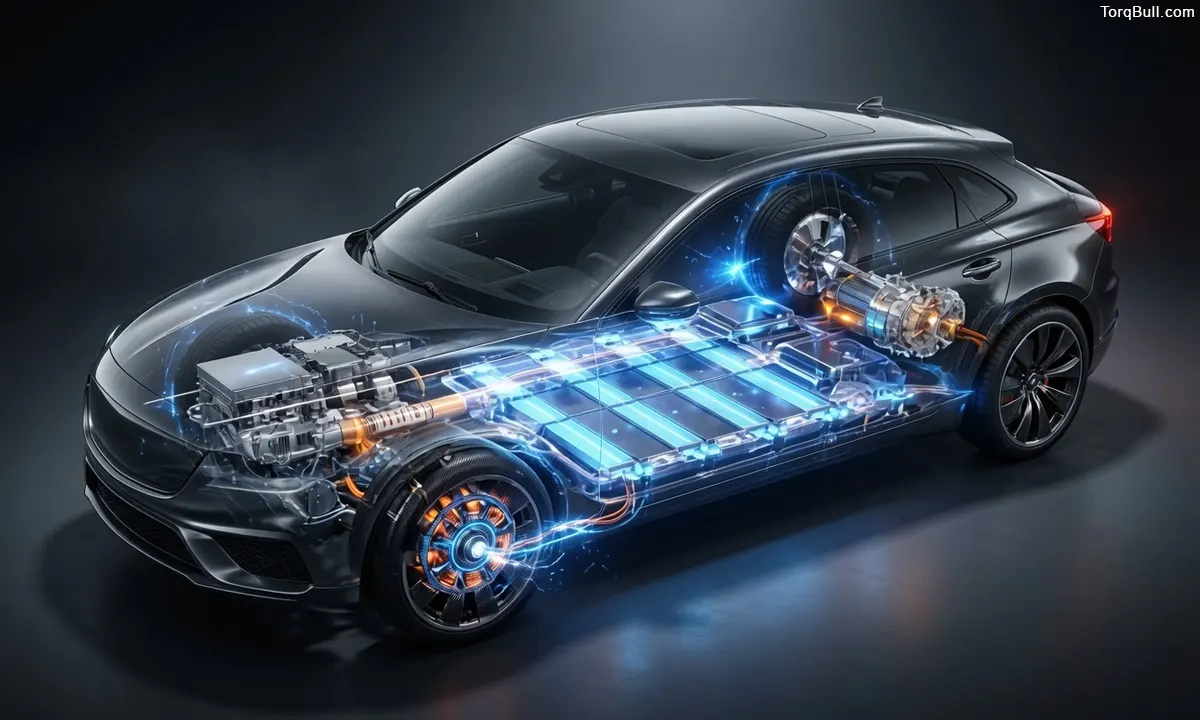
So why are these results so much better than the early predictions? One factor towers above the rest: how the battery is kept cool. EVs with active thermal management, meaning liquid cooling and heating for the pack, retain capacity dramatically better than those without.
And here is where the myth came from, because it was once partly true. The Nissan Leaf’s passive cooling system is the cautionary tale, and virtually every modern EV has learned from that lesson. Early Leafs, with no active cooling, really did degrade badly, especially in hot climates, and those horror stories calcified into the general belief that all EV batteries are fragile. The technology moved on. The reputation lagged behind. Today’s liquid-cooled packs are a completely different animal.
Read: EV Charging Cost Per Month in the USA. A Complete Comparison
How the Myth Compares to Reality
Here is the fear stacked against the data.
| The Fear | The Reality |
| Battery dies around 100,000 miles | Most retain 88 to 92% at 100,000 miles |
| Range collapses suddenly | Gradual, non-linear S-curve decline |
| You’ll need a $15,000 replacement | Rare within warranty; most never need it |
| All EV batteries are fragile | Modern liquid-cooled packs are highly durable |
| Useless after 8 years | Average 81.6% capacity at 8 years |
That left column is the story that scared a generation of buyers. The right column is what is actually parked in real driveways across America.
Now Let Me Be Honest: It’s Not Pure Magic
I promised balance, and the data does carry real caveats that the cheerleaders sometimes skip. The most important one is that degradation is trending slightly worse, not better, as habits change. In the 2024 study the average degradation rate was 1.8 percent per year, but the updated 2026 study found it rose to 2.3 percent per year, driven partly by an increase in fast charging. That is a genuine wrinkle worth watching as more drivers lean on DC fast chargers.
Your behavior and environment matter too. Vehicles that rely heavily on high-power DC fast charging above 100 kW can see higher average degradation, while those mostly using lower-power charging show less. Heat, routinely charging to 100 percent, and aggressive driving all add stress. There is also a sobering finding hidden in the durability data. Degradation of the traction battery increases significantly after nearly 100,000 km of mileage, meaning the gentle plateau does not last forever, and very high-mileage packs may decline faster.
And if a battery does fail outside warranty, the bill is real. A replacement can run anywhere from $5,000 to $20,000 depending on the model. That outcome is rare, but it is not zero, and it is why the fear has staying power.
Here is my read, though. None of these caveats resurrect the time-bomb myth. The degradation uptick is small and tied to a specific, avoidable behavior. The replacement cost is scary precisely because it so rarely happens. And the post-100,000-km acceleration still leaves most packs comfortably usable for years. The caveats refine the good news. They do not reverse it.
What This Means for Your Range and Resale
Let’s translate all this into terms you actually feel. Degradation does not strand you. Battery degradation doesn’t mean your EV stops running. It means the battery stores a bit less energy, so your range gradually declines. In real numbers, a 300-mile EV might still deliver around 238 miles after a decade in a simplified example, plenty for the average American who drives just 37 miles a day.
For the long haul, the picture stays strong. Community datasets from long-term owners show many modern EVs still retain 85 to 90 percent of capacity after 150,000 to 200,000 miles, which is lifetime-of-the-vehicle territory for most people. And because EVs have so few moving parts, the rest of the car tends to be cheap to keep alive while the battery quietly soldiers on.
Verdict: The Real Lie Was the Fear Itself
So, is the EV battery a lie? After digging through the real-world data, my honest answer is this: the lie was never the battery. The lie was the fear.
The narrative that modern EV batteries fall off a cliff at 100,000 miles and saddle you with a ruinous replacement bill is, for the overwhelming majority of today’s cars, simply not what is happening. Real US drivers crossing 100,000 miles are mostly experiencing a modest 8 to 12 percent loss of capacity, a gentle and predictable fade, not a catastrophe. The big datasets, tens of thousands of actual vehicles, confirm it again and again. Modern liquid-cooled batteries are durable, the scary early Leaf stories no longer represent the technology, and high-mileage EVs are better used buys than their odometers suggest.
But I will not hand you blind optimism either, because the data does not support that. Batteries are not immortal. The degradation rate ticked up in 2026 as fast charging spread. Heat, constant DC fast charging, and habitually charging to 100 percent will measurably shorten your battery’s healthy life. And in the rare case a pack does fail out of warranty, the bill is genuinely painful. This is durable technology, not magic technology, and how you treat it matters.